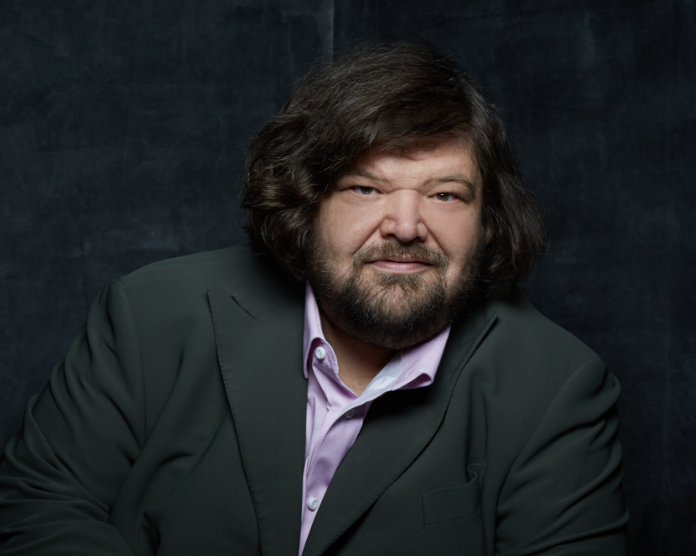
In his latest chapbook, Blaze without Burning, poet William May delves into loss, love, and the delicate balance between intensity and preservation. The collection’s innovative “twin”-poem structure pairs poems with the same title but distinct perspectives, offering readers a layered exploration of memory, perception, and emotional endurance.
Drawing from years of writing during a period marked by personal grief and caregiving, May crafts a work that is both intimate and universal, navigating the tension between creation and destruction, vulnerability and resilience. Through vivid imagery, subtle tonal shifts, and careful structural design, Blaze without Burning invites readers into a contemplative journey where grief, love, and connection intertwine.
Below, William May discusses the inspirations, process, and emotional currents that shaped this luminous new collection.
Your collection uses a “twin”-poem structure—each poem in the first section has a counterpart in the second with the same title but a different perspective. What inspired this mirrored architecture, and how did it influence your writing process?
Blaze without Burning developed from poetry that I wrote over a period of years. At the time that this manuscript came together, I was fortunate to be working closely with the poet Freesia McKee. Freesia would often help me to review work that I was revising and preparing to send out on submission, and she suggested that the poems which became this chapbook would fit well as a collection. It was during the process of collecting and revising the poems that the idea of pairing the poems came into focus. It was truly an organic outgrowth of that process and not something that had been intended while I was writing.
The title Blaze without Burning evokes a paradox of intensity without destruction. How do you define that concept in relation to the themes of love, loss and resilience that you explore?
There are, of course, many layers to an image, and I think it is important to respect that, to let the reader have the freedom to find their own meaning; indeed, for me, much of the purpose of using imagery that can be interpreted is to engage the reader in discovering what meanings exist for themself. That having been said, for me, I think a part of what this image is driving towards is about the line between the creation and destruction. The more powerful the flame, the brighter, but also, the more dangerous. We need to feel grief, for example, but how do we feel it deeply and truly in a way that does not leave us lost? We may need the flame for warmth, but how close can we sit, how large can we let it grow?
You write quite openly about your neurodiverse background and early reading/writing struggles. How does your personal journey inform the emotional core of the poems in this book?
These poems were written at a specific period of my life and reflect a specific moment when I was at what might be considered a specific stage in my journey. My father had recently passed away and my partner, Melissa, and I were in the process of providing end of life care for her Mother. My father is, very certainly, the ghost that haunts this book, even though he is not at the center of the poems; I might argue that the lack of direct focus on that still-present grieving is a large part of what drives the book. The poems exist within that emotional cloud, even when they are not directly focused on or even conscious of it.
Many reviewers reference the way memory, perception and shifting perspective play through the chapbook (“a dialogue of perception and possibility”). How do you see the relationship between memory and poetry in this work?
We tend to think of memory as a record of the past, but the truth is, memory is a living part of our being. It is not static, but changes in subtle ways as we retrieve and consider it. The relationship with that past is very much a central force in driving much poetry, certainly, at least, for myself, and I think the poems in Blaze without Burning are very often about considering how the past remains with us, and how we can resolve those things from the past that still haunt us in a way that remains in touch with that identity.
The collection is relatively short yet rich in structural innovation. Did the form force you to make particular choices (what to include vs what to leave out)? What was the editing process like?
As I mentioned earlier, this collection came together from poetry that I had written over several years. I tend to write quite prolifically, with at least one new poem each day, and quite often more than that. This means that I wind up with a great deal of work. These are not, I will remind you, finished poems for the most part but drafts, and many times I write several poems that will circle around the same central poetic idea, iterating on it as I try and discover just what is at the core of that conceit. That is to say, these poems were selected from a far larger body of work, and were chosen because they seemed to connect in terms of theme and general approach.
I find revision to be very difficult in general, but it becomes far easier when I can create a context to guide my process. Once the work had been selected, that context was in view. By looking at the poems as a whole, I was able to recognize the aspects that connected the poems, and could more easily envision what I wanted them each to be. That was the process that led me to discovering the ultimate structure of the book. I think I have recounted this before, but essentially, I was working to retitle some of the poems and started to just notice that a certain title worked exceptionally well for two of the poems (I cannot quite recall which), and from there, the idea of twinning the poems, really the entire structure of the book, just jumped out.
Resonances of connection emerge often—between two people, two selves, two times. What role does “relationship” (with others, with self, with language) play in your poetry here?
I think that the structure of Blaze without Burning almost requires that interconnection is a core theme of the work. This book is all about the relationships between the individual poems and between the two sections of the book, and that, I think, invites the reader into a space where they are considering those relationships. In each poem, there is a specific moment, and the speaker has a certain relationship to the poem that is grounded in that specific instance. Often, though, that relationship is not, I hope, final, and the reader can return again, and upon rereading and considering the added insight of the book as a whole, discover perspectives that had not been apparent on first glance.
The publisher describes the twin-poems not merely as two versions of the same thing, but as “distinct perspectives” on a title. Could you pick one pair in the book and walk us through how you approached writing each version differently?
Tonight I Saw The Moon Again
You are the cloud
that covers the moon,
but I will be the wind,
the light, space
between land and sky,
I will be what surrounds
you. You will block
what can be seen, but
your screen cannot be
between us.
Tonight I Saw The Moon Again
Do not walk down that road on nights
when the moon is waning,
especially not when it is a sharp
slit, a bright sickle against dark sky.
On those nights, travel other roads, or walk
the other way, up from here along that road.
That way is fine, but you must not go down
this road then. It is best I not explain,
or you might be tempted, thinking
you can outsmart forces you do not understand.
The process that brought this book together was largely an intuitive one. As I mentioned, Blaze without Burning began with a group of poems that I had already written, so the poems were not actually written to be specific pairs. In many ways, the process of bringing the work together, once the conceit of twinning the poems became clear, was about recognizing the themes and the overall journey of the book. For example, there are a lot of images related to the sky, to the sun, and, in this case, to the moon. One of the most important parts of any creative work, I think, is the system of images that it develops and how those images create meaning through, how they can weave together the varied threads that make up the whole of the work. The moon is the most obvious connection here, but it is not the only one. Even on a very basic, formal level, the poems share an overall shape, with each containing one ten line stanza.
That is, I admit, rather trivial, but I think those small connections help to inform the reader. A poem in one stanza has a different feel, a different pace, than if it were arranged into a number of smaller, faster moving sections. The length, as well, has a certain quality to it. All this doesn’t necessarily come across as significant when the poems are isolated, but within the book, these similarities help to reinforce the connection created by the shared title. I feel that the strongest connections, though, are really more tonal. While the poems are very different, with the first feeling a bit more positive, and the second more weary, with an awareness of lurking dangers, each has a sense of mystery, as well. In both cases, the title gives a slightly removed perspective, and suggests that these are reflection pieces, that the speaker is responding to the experience of feeling the night around them.
For readers new to poetry, what would you say is the emotional journey you hope they take through Blaze without Burning? Are there moments you hope will surprise or challenge them?
It is hard for me to embody the specifics of what I hoped to capture in this book. In truth, if I could just write a sentence to say it, why not just do that instead? A book is more than just one thing, and it contains a great deal, and, truthfully, that is the value of the work. I think readers, especially those who wander over from the land of prose, will find something honest and straightforward, but not in a way that removes complexity. I write poetry to express aspects of my experience as a person living in the world with the hope that it can touch another person. This book, specifically, is wrestling with grief and with adjusting to the world in the aftermath of loss, and I think that it ultimately becomes a book about resilience, about how pain can inform and shape us, and even remain with us, while we still heal and grow, and even prepare ourselves to live with new challenges.
How did you balance the impulse to be accessible / emotionally direct with the formal ambition and experimentation of the twin-poem structure?
Accessibility is not something that I am consciously thinking about when writing, which is not to say that I don’t value it or wish to make my work accessible. What I mean is that I don’t actively think about being accessible as I am composing a poem, because, as someone who has written poetry for almost my entire life and who values accessibility in my work, it is something I worked to develop as a habit and an underlying quality. That isn’t to say that I don’t, at times, play with other forms of meaning, or that I am always aware of what is or isn’t easily parsed by a reader, but rather that I don’t think about that question during the process. Clarification is often an important part of what is accomplished in revision, at least for me. I think, in many ways, the structure works best because the individual poems within the book each present something that is, I hope, clear; it is the juxtapositions of those specific moments with another poem’s alternative point of view which creates complexity, asking the reader to reconsider those initial perspectives and to recognize them as pieces in a more complex whole.
Looking ahead: how do you see Blaze without Burning influencing your next work? Did this chapbook change how you think about your voice, style, or subject matter for what comes next?
I think that, for me, the largest lesson that I learned in crafting Blaze without Burning was about the ways I want to think of a poetry collection. It would be quite easy for me to just pull a bunch of poems that I have already written and throw them together and call that a book. I mean, obviously, even just doing that would take a large amount of work that I am glossing over, from choosing the poems to revising them, and all of that, but the point is, I could easily see a book of poetry as a place to just put individual poems for them to live their own individual lives. I can point at many wonderful and beloved collections of poetry that I think are largely the result of a poet just collecting the work they have done over a certain period, for example, without a larger ambition to the collection, and I think that is a very valid approach. Indeed, before I had put this collection together, I would probably have considered that the main approach, other than writing an entire book as a project. In creating Blaze…, though, I discovered another way that I feel is more suited to my own way of working, one in which I have the freedom to write without a larger ambition, and the ability to use crafting a collection as a tool for revising that work together to create a cohesive whole.
 Cool Happy Genius Heroes