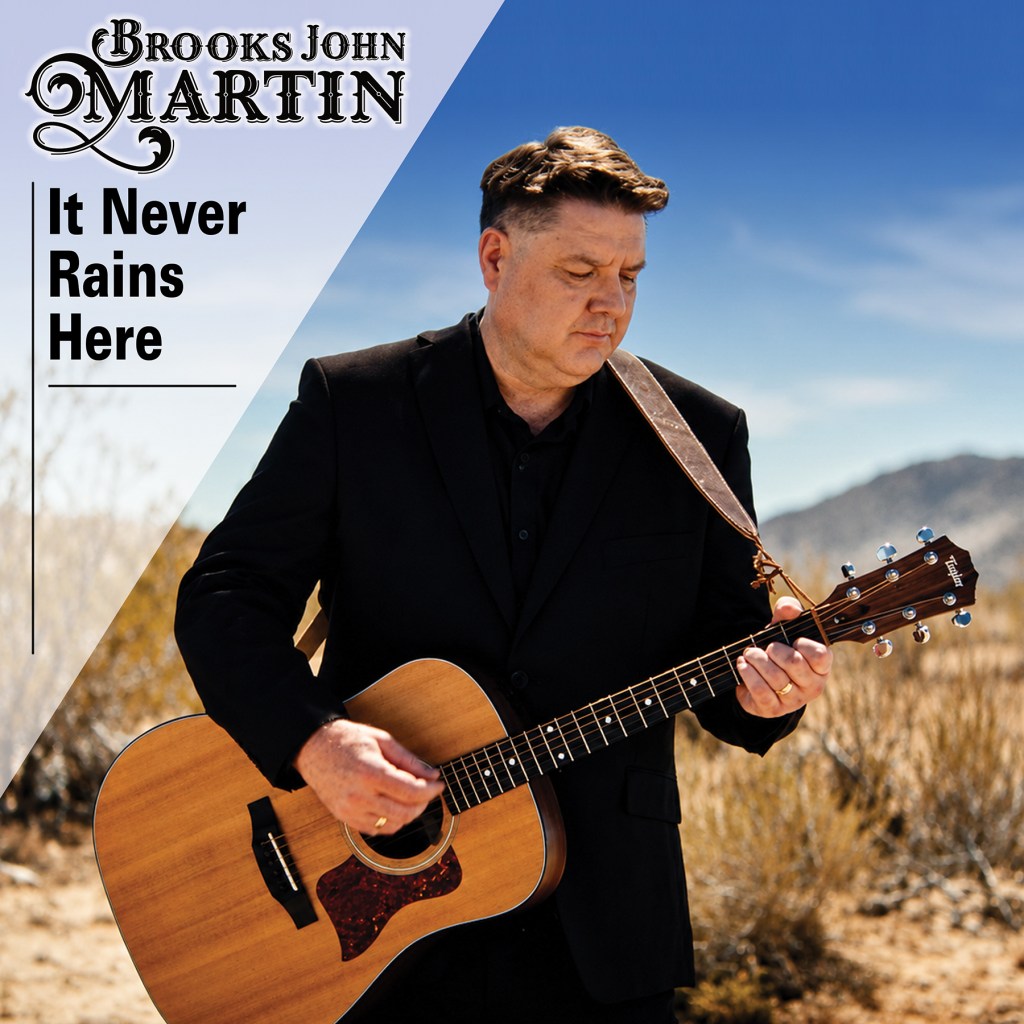
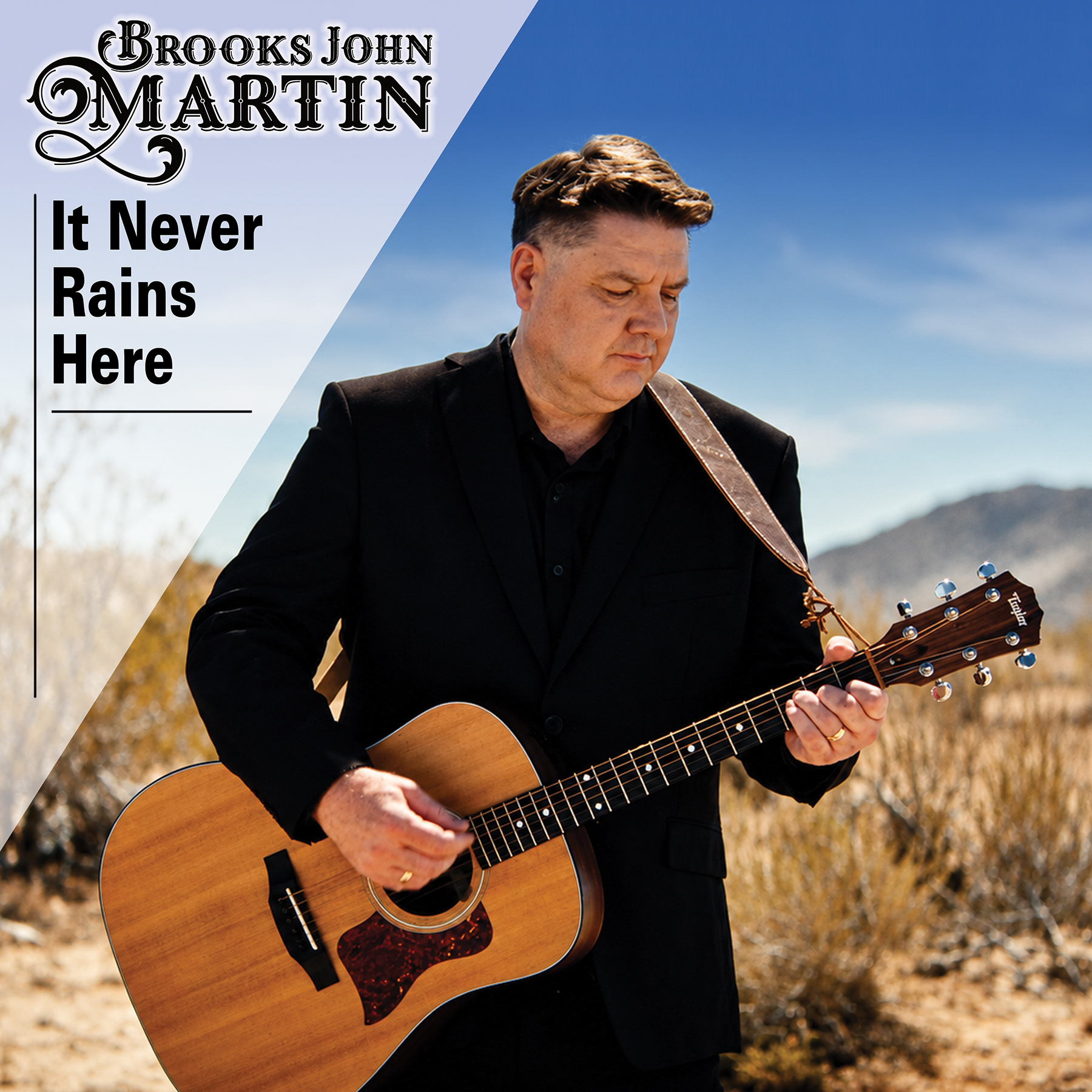
• Brooks John Martin Brings a Dusty Western Tale to Life on “It Never Rains Here”

    An Arizona setting, a man down on his luck and the sweeping musical character of California country give Brooks John Martin plenty of room to indulge his love of storytelling.

    There is a character who seems destined to turn up in a Western: the man who has lost just about everything, has nowhere much to go and is left to work out what happens next. Brooks John Martin introduces us to one such character on “It Never Rains Here”, his latest single, drawing on the landscapes and atmosphere of Arizona to create a story with all the ingredients of a classic hard-luck tale.

    Martin spent four years living in Arizona, so the setting comes from somewhere he knows rather than a landscape borrowed entirely from the imagination. For this song, however, he takes that familiarity and uses it as the backdrop for a fictional character whose fortunes have taken a serious turn. He’s lost his money, he’s broke, and the woman in his life has walked away. There isn’t much going right for him, and the unforgiving desert seems an appropriate place to contemplate his predicament.

    Watch the Official Music Video here:

    The appeal of “It Never Rains Here” lies partly in Martin’s ability to make a song feel like a scene from a film. His affection for narrative songwriting is evident throughout his work, and he has spoken about using music to explore romantic stories and faraway places. “I go for the emotional payoff with my songs. It’s an outlet for me to go on adventures.”

    That philosophy is particularly well suited to this release. Martin creates a character and gives him a landscape, a history and a rather unfortunate set of circumstances.

    Musically, the single belongs to the California country world of War All The Time. The high lonesome pedal steel brings an unmistakable country character, while the majestic strings give the arrangement a broader, cinematic dimension. Martin’s expressive baritone provides the natural centre of the song, carrying the narrative with the kind of presence that makes you want to follow the story to its conclusion. There is a clear affection for the musical traditions behind the song, but Martin brings his own sensibility to the combination, allowing country influences and expansive folk-rock arrangements to sit comfortably together.

    The title itself has the feel of a line that might be overheard in a roadside bar or spoken by someone who has spent too long waiting for circumstances to change. It suggests a place where good fortune is in short supply, and where even the weather seems unwilling to offer much relief. Against that backdrop, Martin’s protagonist becomes an interesting figure: a man whose personal troubles are played out against a landscape that is every bit as unforgiving as his circumstances.

    The official music video, which is directed by Scott Felix and produced by The Sunflower Pictures, gives the release a further visual identity. The Western setting offers plenty of scope for cinematic storytelling, complementing Martin’s interest in creating characters and imagined worlds through his songs. It is a natural pairing for a track that already feels rooted in the visual language of the American West.

    What distinguishes Martin is his willingness to let songwriting take him beyond the familiar. His music can be personal and autobiographical, but he is equally interested in the stories he can invent, the places he can revisit and the emotional territory he can explore through another character’s experience. “It Never Rains Here” brings those interests together in a song that feels like a small Western narrative set to music.

    With its country sensibility, sweeping arrangement and distinctly American setting, the single adds another chapter to Martin’s ongoing musical journey. His latest protagonist may have lost his money and his girl, but Brooks John Martin has found another story worth telling.

    Video Credits

    Performed by: Brooks John Martin
    Director: Scott Felix
    Production Company: The Sunflower Pictures

    Connect with Brooks John Martin on his Website
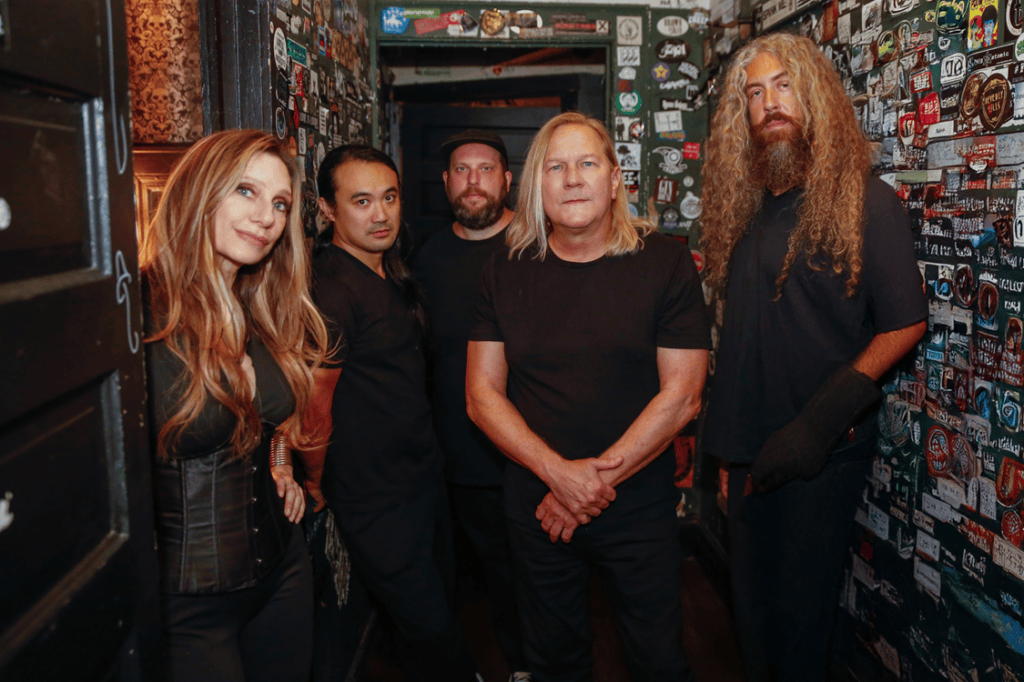
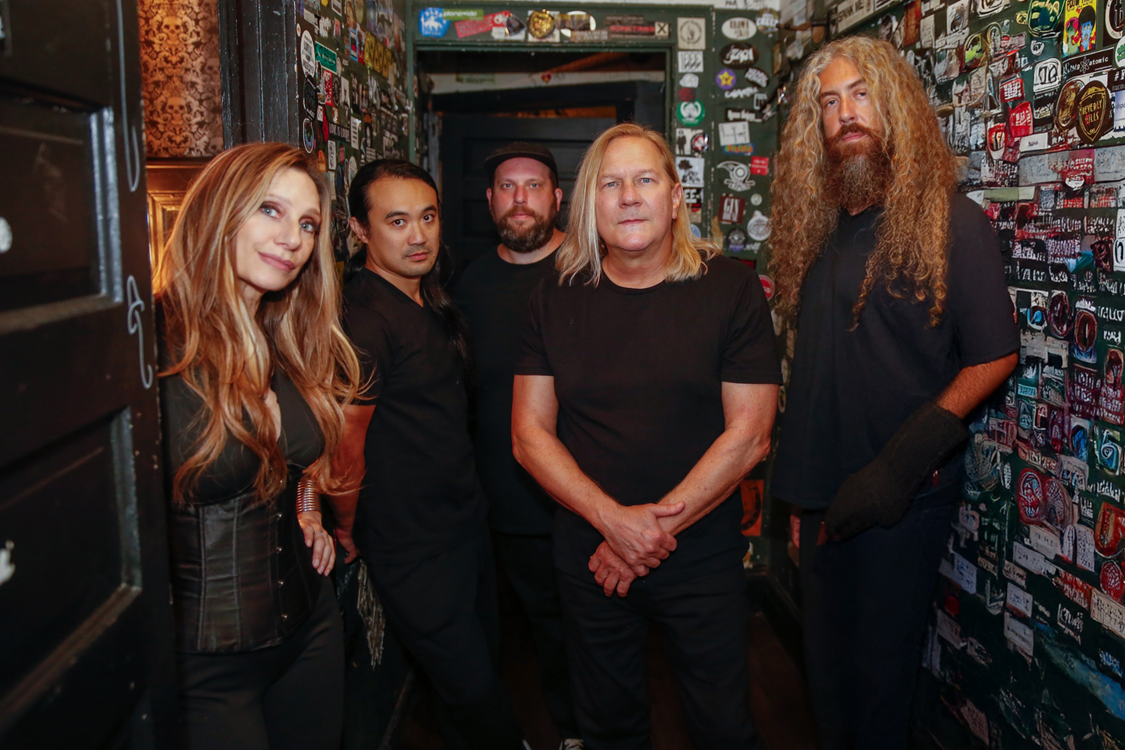
  • SIREN Find That Forever Has a Rather Dark Sense of Humour on “No More”

    An unconventional take on marriage, mortality and eternal devotion, SIREN turn a familiar romantic promise into an entertaining rock story with a distinctly macabre twist.

    What happens when a marriage outlasts even the people involved? It’s not an everyday question, admittedly, but it’s precisely the sort of territory SIREN explore on their latest release, “No More”.

    Taking the traditional wedding vow “till death do us part” and giving it a rather unexpected interpretation, the band imagine a couple whose relationship difficulties continue long after their earthly existence has come to an end. It’s an intriguing concept, and one that gives SIREN an opportunity to approach the subject of love and commitment from an entirely different angle.

    Watch the Official Music Video here:

    With a narrative centred on mortality, marital disillusionment and the possibility of an eternal disagreement, one might anticipate something considerably darker in its musical delivery. Instead, SIREN introduce an almost celebratory quality, creating an interesting tension between the song’s subject and its sound.

    That contrast works particularly well because the band don’t appear interested in making their concept unnecessarily complicated. The central idea is immediately understandable, but there is enough room within it to consider the meaning of lifelong commitment and the expectations that accompany marriage. The promise of forever is a familiar romantic ideal, but SIREN turn it into something that might give even the most devoted couple pause for thought.

    The band draw from rock, progressive influences and Middle American roots traditions, bringing these elements together in a sound that gives the song both character and accessibility. The rock foundations provide a familiar framework, while the progressive touches allow the arrangement to develop its own personality. Rather than allowing the narrative to dominate everything, SIREN give the music space to establish its own identity, which makes the contrast with the lyrical premise all the more effective.

    The accompanying video adds another layer to the story, with Wayne Joyner taking the concept beyond the original premise and straight into the afterlife. His interpretation follows the couple as they continue working through their relationship difficulties in death, turning the idea of eternal devotion into a darkly entertaining visual narrative. The production also benefits from the band’s involvement, with Rob Phillips, Randy and Mike contributing ideas during the development process.

    The finished video incorporates the band as skeletons, pumpkins and a smoking candle, giving the production an unmistakable Halloween flavour. It reportedly took around four drafts to arrive at the final version, and the attention given to the visual details pays off. The tombstones marked “Forever” and “More” are particularly effective, playing on the language of romantic commitment while suggesting that some relationships might have rather more staying power than either person anticipated. The final appearance of SIREN’s smoked logo completes the presentation with an appropriately atmospheric flourish.

    Joyner deserves credit for recognising the potential in the song’s concept and translating it into something that works independently as a visual piece. There is a playful quality to the production, but it never loses sight of the central narrative. The result feels like a natural extension of the music rather than simply a promotional video assembled around it.

    What makes “No More” enjoyable is its willingness to find humour in a subject that could otherwise become rather heavy. Love, marriage and mortality are familiar themes in songwriting, but SIREN approach them from an unusual perspective, using an imaginative storyline and an unexpected musical contrast to keep the listener engaged. There is also something quite relatable about the underlying premise. Relationships require patience, compromise and a considerable amount of understanding, and apparently none of those things come with an expiry date.

    Connect with SIREN:

    Website / Instagram / YouTube Music

  • Universal Master (Mr. Businessman): MASSEY Brings the Thunder with a Hard Rock Wake-Up Call

    There is a special kind of rock song that doesn’t need to shout about its intentions because the music does the talking. “Universal Master (Mr. Businessman)” has that quality, although MASSEY is certainly not holding back.

    His latest release is fuelled by a deepening frustration with the people at the very top, those who use their wealth and influence to serve themselves while everyone else is left to deal with the consequences. It is a subject that gives the song plenty of fire, and MASSEY responds with his heaviest, most uncompromising rock performance to date.

    This is MASSEY in particularly uncompromising form. Known for moving between funk, soul, rock and more theatrical musical territory, he takes a decidedly heavier route here. The track carries a brooding intensity, with the sort of dark, imposing atmosphere that brings Black Sabbath’s “War Pigs” and Led Zeppelin’s “Dazed and Confused” to mind. These are substantial reference points, but they give a useful indication of the territory MASSEY is exploring: music with muscle, attitude and a genuine sense of confrontation.

    There is a growing frustration at the heart of the song, directed towards the ultra-powerful and their seemingly limitless appetite for more. MASSEY gives that frustration a voice, delivering the lyrics with a forceful, impassioned performance that feels entirely invested in its subject. He doesn’t sound as though he is simply observing the state of the world from a comfortable distance. There is fire in the delivery, and the harder the song pushes forward, the more that indignation takes hold.

    Co-songwriter Peter Oravetz is an equally important part of the equation. His guitar work brings a searing edge to the arrangement, providing the perfect counterpart to MASSEY’s vocal. There is a real sense of exchange between the two, with the guitar adding weight and urgency as the song develops. It is the kind of performance that reminds you just how much a great rock guitar part can contribute to the personality of a song.

    What makes “Universal Master” particularly interesting, however, is where it eventually takes us. For all the anger and discontent that drive its opening and central passages, the song ultimately moves towards something more uplifting. The vocal and guitar combine in a final release that feels like a musical exhalation, transforming the earlier frustration into a moment of redemption. It is an effective contrast, and one that gives the track more emotional depth than a straightforward hard-rock protest anthem might otherwise offer.

    As part of Reason For Being, it also demonstrates another side of MASSEY’s musical personality. This is an artist who clearly enjoys exploring different sounds and approaches, and who isn’t particularly interested in being confined to one musical identity. Here, the funk and soul give way to something darker, heavier and more direct, without losing the theatrical instincts that make the project distinctive.

    “Universal Master (Mr. Businessman)” is a sizeable statement, driven by a subject that feels all too familiar and delivered with enough conviction to make its point. MASSEY and Peter Oravetz have created a track that deserves to be heard at full volume.

    MASSEY isn’t your typical frontman. He doesn’t play traditional instruments. Instead, he vocalizes every part of a song, whistling basslines, scatting horn lines and humming guitar riffs. And then brings those ideas to life with a team of collaborators.

    Longtime guitarist and co writer Peter Oravetz has been a key partner in transforming MASSEY’s sketches into full bodied tracks that blend funk, soul, rock and storytelling.

    His upcoming single “Bookin’” is out September 12th. With a mix of flair, groove heavy energy and heartfelt storytelling, MASSEY is quickly establishing himself as a voice for connection and musical adventure.

    With a mix of cinematic flair, groove-heavy energy, and heartfelt storytelling, MASSEY is quickly establishing himself as a voice for connection and musical adventure.

    Connect with MASSEY on his Website

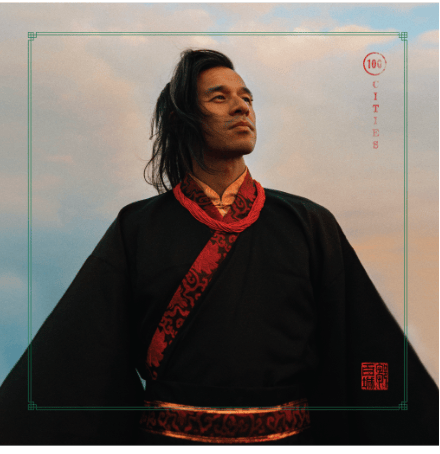
  • Tennyson King Finds His Way Back to Himself on 100 Cities 百城, Led by Indie-Folk Single “Tiny Home”

    Toronto-based, Hong Kong-born songwriter Tennyson King unveils his new album, 100 Cities 百城, a deeply personal exploration of cultural reclamation, self-discovery, love, loss and belonging. Blending his Western indie-folk sensibilities with traditional Chinese instruments including zhongruan, guzheng, erhu, dizi, xiao and pipa, the record finds King returning to a heritage he once felt pressured to hide and creating a musical language that more fully reflects who he is.

    The album’s title is a literal English translation of King’s Chinese name, 百城 (Baak Sing). Meaning “100 Cities,” it feels fitting for a songwriter whose nomadic life has taken him around the world, but whose travels have ultimately led him back toward his own origins.

    “The most important thing to me about 100 Cities 百城 is sharing more of myself and my Chinese culture,” King says. “I feel like I’ve been hiding a lot of it for so much of my life, even holding onto it with a degree of shame. But I feel 100% proud of who I am now, and I think the joy of that shows up in this new music.”

    That shame began with childhood bullying over speaking Cantonese with his family and bringing Chinese food to school, leading King to believe assimilation was the easiest path toward belonging. Years later, he began deliberately retracing the culture he had distanced himself from, first learning the zhongruan before connecting with traditional Chinese musicians throughout Toronto.

    Rather than simply placing traditional Chinese instrumentation around Western folk songs, 100 Cities 百城 searches for common ground between the two traditions. King found it in their shared use of pentatonic melodies and emphasis on storytelling, bringing together musical worlds that had previously felt separate within his own identity.

    That exploration became deeply collaborative. King recorded traditional Chinese instruments live, often bringing portable equipment into musicians’ homes and working alongside each player on arrangements. Along with co-producer and longtime collaborator Dan Hosh, the process connected King more closely with Toronto’s Chinese Canadian musical community while pushing his songwriting and arrangements beyond familiar territory.

    Across 100 Cities 百城, that cultural rediscovery unfolds alongside the experiences King has collected through a life of movement. “Big Mountain High 大山高” reaches toward his ancestry through a famous Chinese musical story, while “The Great Unknown” turns a near-drowning experience in Australia into a meditation on surrender. The gentle focus track “Tiny Home” captures the sweetness of embarking on a life together, offering an intimate counterpoint within a record also shaped by adventure, uncertainty, loneliness and love.

    “The main theme, I believe, is self-discovery,” King says. “I want people to know that no matter where each of us are from, we all go through similar journeys of love, loss, adventure, uncertainty. How we come to terms with those things is what makes us unique and how we can inspire each other to co-exist in this world.”

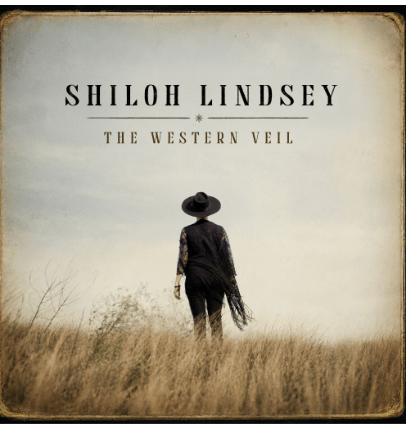
  • Shiloh Lindsey Confronts Life’s Storms on New Album The Western Veil, Led by “Said & Done”

    Canadian singer-songwriter Shiloh Lindsey unveils her new album, The Western Veil, a raw and deeply lived-in exploration of what happens when the life you knew is no longer available to you. Moving through mortality, relationships, resilience, anger, wonder, and the uneasy work of rebuilding, the record finds Shiloh leaning further into alt-country, Americana, and folk-rock while learning to meet change as it comes rather than searching for a way back.

    The Western Veil emerged after Shiloh’s life was dramatically rearranged. In October 2024, a motorcycle accident nearly claimed her leg, beginning a recovery that would involve seven surgeries, serious infection, and extensive bone reconstruction. At the same time, a six-year relationship came to an end. With mortality, identity, grief, and uncertainty suddenly pushed to the foreground, songwriting became less about finding answers than documenting transformation while it was still happening.

    “I don’t think the album is saying, ‘Here’s how to survive something,’” Shiloh explains. “It’s more like a record of someone moving through it in real time.”

    The title eventually came to represent what Shiloh describes as a wiser, more intuitive part of herself – a higher self that sometimes seems to speak through a song before its conscious meaning becomes clear. Throughout the record, lyrics arrived that Shiloh would only fully understand months later, reinforcing her belief that songwriting can reveal something before the writer is ready to articulate it.

    That instinct is at the heart of “Said & Done,” The Western Veil’s defiant yet bittersweet focus track. Written during the raw aftermath of Shiloh’s accident and breakup, the song began almost accidentally after an evening spent having beers with a longtime friend and neighbour. After he left, she picked up her guitar and the first verse and chorus arrived almost immediately.

    At its centre was an image of a buffalo facing into a storm. Shiloh had not consciously set out to write about resilience, but gradually recognized herself in the metaphor. “The song was reminding me that sometimes the way through something is to turn toward it rather than keep trying to escape it,” she says.

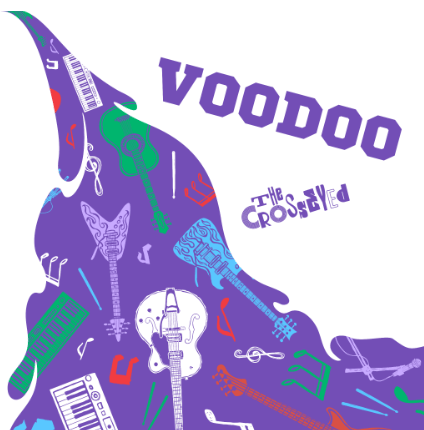
  • The Crosseyed Embrace the Darker Side of Rock on “Voodoo”

    American alt-rock band The Crosseyed dig into betrayal and broken trust on “Voodoo,” a raw, swaggering new single that brings old-school funk into collision with the weight and drive of classic rock. Recorded live at Mission Sound in Brooklyn with renowned bassist Adam Dorn (Mocean Worker), legendary session drummer Steven Wolf, and guitar player extraordinaire Marc Copely, the track channels Sly and the Family Stone, Led Zeppelin, and The Rolling Stones into a groove-heavy reckoning with discovering someone’s true colours.

    For The Crosseyed’s founder Jeff Malkin, “Voodoo” was inspired by someone he trusted wholeheartedly – a person who regularly preached the importance of doing right by others, only to abandon those principles when circumstances became difficult.

    “I was shocked and realized he wasn’t the person I believed him to be,” Malkin says. “The song is about once crossing that line to the darkness, there’s no coming back.”

    Hence “Voodoo” – or, as Malkin jokes, the slightly more cumbersome alternative: “There Ain’t No Coming Back From the Voodoo That You Do.”

    Malkin keeps that confrontation deliberately direct. A believer in Berry Gordy’s “don’t bore us, get to the chorus” philosophy, he approaches lyrics with a similar economy, aiming to tell the story or deliver the message with as few words as possible.

    The song’s musical foundation began during the recording of The Crosseyed’s second album in New York City in 2025, when Dorn stopped by the studio to visit his longtime childhood friend Wolf. After hearing the band, Dorn approached Malkin about collaborating, prompting him to write “Voodoo,” particularly its chorus riff, with the bassist’s funk and jazz background in mind.

    One final ingredient arrived after The Crosseyed debuted “Voodoo” live. Ramona Dunlap’s vocals made such an impression that the band brought her into the studio several weeks later, adding a fiery “Gimme Shelter”-era Rolling Stones dimension to the recording. The result is a collision of funk-driven rhythm, classic-rock muscle, and live energy that matches the song’s uncompromising message.

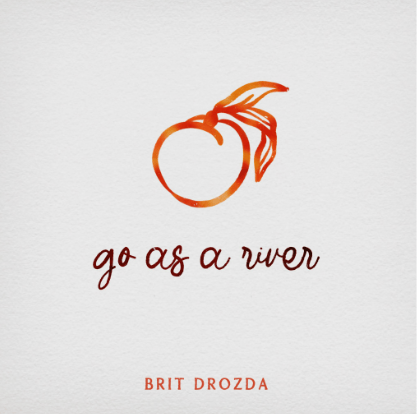
  • Brit Drozda Embraces the Beauty of Letting Go on Dreamy Folk-Pop Single “Go as a River”

    Palm Beach, Florida-based singer-songwriter Brit Drozda shares “Go as a River,” a cinematic love song inspired by Shelley Read’s acclaimed novel of the same name. Exploring loss, resilience, and the forces that carry us forward, the track reflects on accepting change and trusting that the love we experience can sustain us through even the most difficult seasons of life.

    Drozda was deeply moved by Read’s story of a young woman shaped by profound tests of love and loss. Its tragic romance and exploration of perseverance particularly resonated with her, offering a reminder of the impermanence of even our closest relationships and the ways people continue to shape us after circumstances change.

    The book’s title soon took on a life beyond the page. “Go as a River” became something of a personal mantra for Drozda through difficult seasons of her own. “It speaks to perseverance, resilience, and hope that in the same way a river pools and rushes, life moves forward,” she explains.

    The song itself almost never made it beyond her voice memos. “As I started to work through it, I realized that the lyrics and melody were carrying me forward, offering me hope and recognition of the love in my life that has helped ‘pull me through,’” Drozda recalls.

    That realization became the song’s emotional centre. Rather than simply enduring difficult experiences, she considers the lasting role love plays in helping us navigate them and how something meaningful can continue to shape us even after it changes or disappears from our lives.

    Working once again with Grammy–winning producer Scott Jacoby (Coldplay, Vampire Weekend, Sia), Drozda wanted the arrangement to begin with intimate, gentle vocals before gradually expanding. The track ebbs and flows toward a powerful, densely layered bridge, allowing the production to follow the emotional progression of the lyric.

    “Go as a River” offers a clear expression of hope, finding strength not in resisting change but in accepting what it can teach us. “I would love for Shelley Read to be able to listen to this song one day,” Drozda says. “It inspired me and is something I will carry forward with me on my own river of life.”

  • From Rio de Janeiro to the World: Brazilian Experimental Rock Band Oruã Looks Back on a Decade of Musical Exploration

    Oruã has spent the last decade taking the sounds of Brazil’s underground music scene to international audiences. The Rio de Janeiro-based collective now celebrates that journey with Maldição (2016-2026), a 20-track double LP retrospective arriving November 13 through K Records.

    Led by guitarist, producer, and Transfusão Noise Records founder Lê Almeida, Oruã brings together elements of psychedelic rock, krautrock, Afrobeat, noise, and Brazilian musical traditions. The result is an unpredictable, rhythm-driven sound built around repetitive bass lines, distorted guitar passages, improvisation, and expansive instrumental arrangements.

    The band’s international profile grew significantly in 2019 when Doug Martsch of Built to Spill invited Almeida and synth player João Casaes to join the influential indie rock group temporarily. The two musicians subsequently worked on Built to Spill’s When the Wind Forgets Your Name, contributing to its recording, production, and mixing.

    Since then, Oruã has toured extensively throughout the United States and Europe, released music through K Records, recorded a BBC session in London, and performed at Lollapalooza São Paulo in March 2026. Their latest retrospective captures ten years of recordings made across different locations and creative periods, offering a look at how a project rooted in Rio’s independent music community developed into an internationally recognized experimental rock band.

    The band will continue its international run with a performance at the 2027 Big Ears Festival in Knoxville, Tennessee, taking place April 1-4.

    With Maldição (2016-2026), Oruã celebrates ten years of pushing beyond musical boundaries while bringing the sounds and spirit of Brazil’s independent underground to audiences around the world.

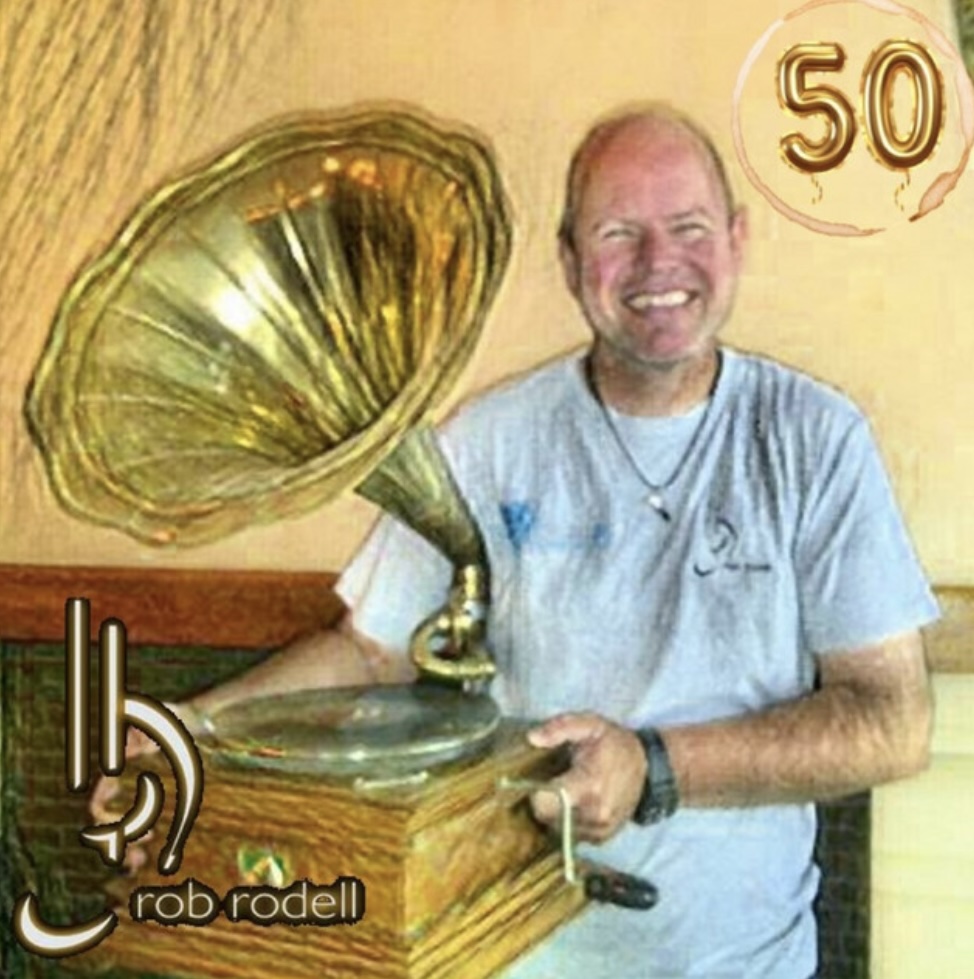
  • Rob Rodell’s “Could This Be Love” – When a Song Finds a Life of Its Own

    Some songs have a curious way of finding their audience, often taking a journey quite different from the one their creator originally imagined. For South African singer-songwriter Rob Rodell, “Could This Be Love” began as an exploration of faith, frustration and the search for personal meaning, before an unexpected musical transformation turned it into a gold-selling House hit.

    Bringing together Rodell’s distinctive vocal style and the production talents of Cuebur, the track has travelled well beyond its original intentions, becoming a soundtrack to countless personal memories, relationships and moments on the dancefloor. Its story is as interesting as the song itself, offering a glimpse into the unpredictable nature of songwriting and the wonderful things that can happen when listeners make a piece of music their own.

    Rodell is an artist with an unusually broad musical vocabulary. Classically trained, with a background spanning contemporary songwriting, a cappella performance and electronic music, he has spent more than two decades exploring different ways of bringing his voice and ideas to an audience. His musical journey has included a South African Music Award nomination, international performances and a gold-certified single, but “Could This Be Love” remains a particularly interesting chapter in that story.

    The original inspiration was far removed from the familiar territory of romantic songwriting. Rodell recalls writing the song during a period when he felt his life was in disarray, describing his mind as a battlefield and his body as the war. His religious beliefs at the time brought an additional dimension to those feelings, as he wrestled with the apparent contradiction between faith, human imperfection and the desire to find some sense of peace. The song became a way of working through those emotions, with its central question directed towards a higher power rather than a romantic interest.

    Yet there is something wonderfully open ended about the lyrics. Confusion, loneliness, frustration and the feeling of being taken for a fool are emotions that can belong to almost any complicated relationship. Rodell recognises that listeners have interpreted the song through their own experiences of infatuation and heartbreak, and is genuinely delighted that they have made it their own.

    Originally conceived as a slower adult contemporary song, “Could This Be Love” underwent a complete change of character after Rodell met producer Cuebur while working at Soul Candi, where he was involved in teaching music business. Cuebur, then a young producer making his mark in House music, asked whether Rodell had any vocal recordings he could experiment with. The resulting remixes provided three different interpretations, with one eventually catching the attention of DJ Shimza and finding its way onto radio.

    The House version gives the song a different kind of momentum, taking Rodell’s expressive vocal and placing it within a more immediate electronic setting. It is an effective combination, allowing the emotional uncertainty of the original to sit alongside the infectious qualities of dance music.

    Rodell has spoken about reading comments from listeners who associate the track with university days, old relationships, friendships and important moments in their lives. For an artist, there can be few more satisfying experiences than discovering that something created in private has become part of somebody else’s personal history.

    That connection also brings us back to Rodell’s interest in reception theory, which explores how the meaning intended by the creator can differ from the meaning received by an audience. “Could This Be Love” provides an almost perfect illustration. The songwriter may have begun with questions about faith and his relationship with God, but listeners have found their own stories within the same words and melodies.

    Rob Rodell’s “Could This Be Love” is an interesting reminder that music rarely remains where its creator first places it. Sometimes a song’s greatest achievement is not simply what it says, but what it comes to mean to everyone who hears it. From an intensely personal piece of songwriting to a gold selling House favourite, this is a track that has travelled a rather remarkable distance and it continues to find new meaning along the way.

    Connect with Rob Rodell on his Website

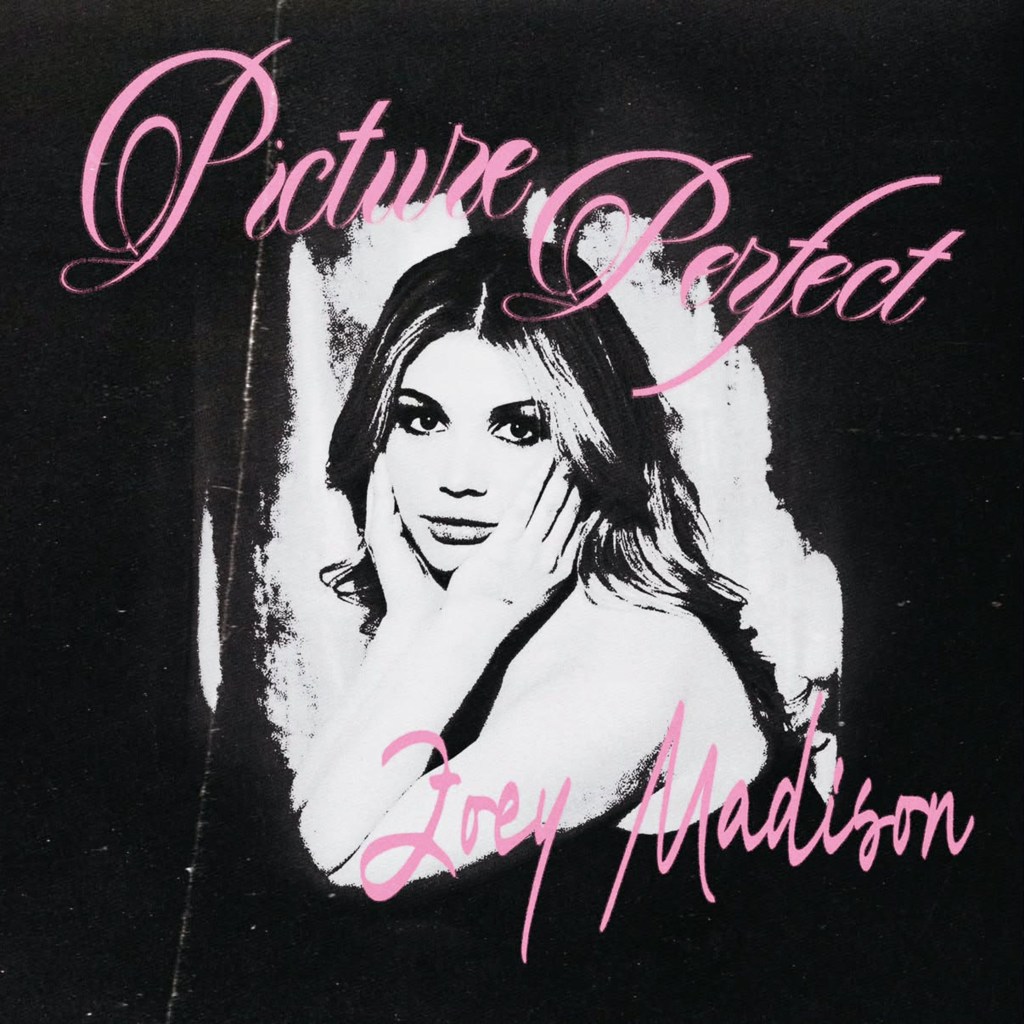
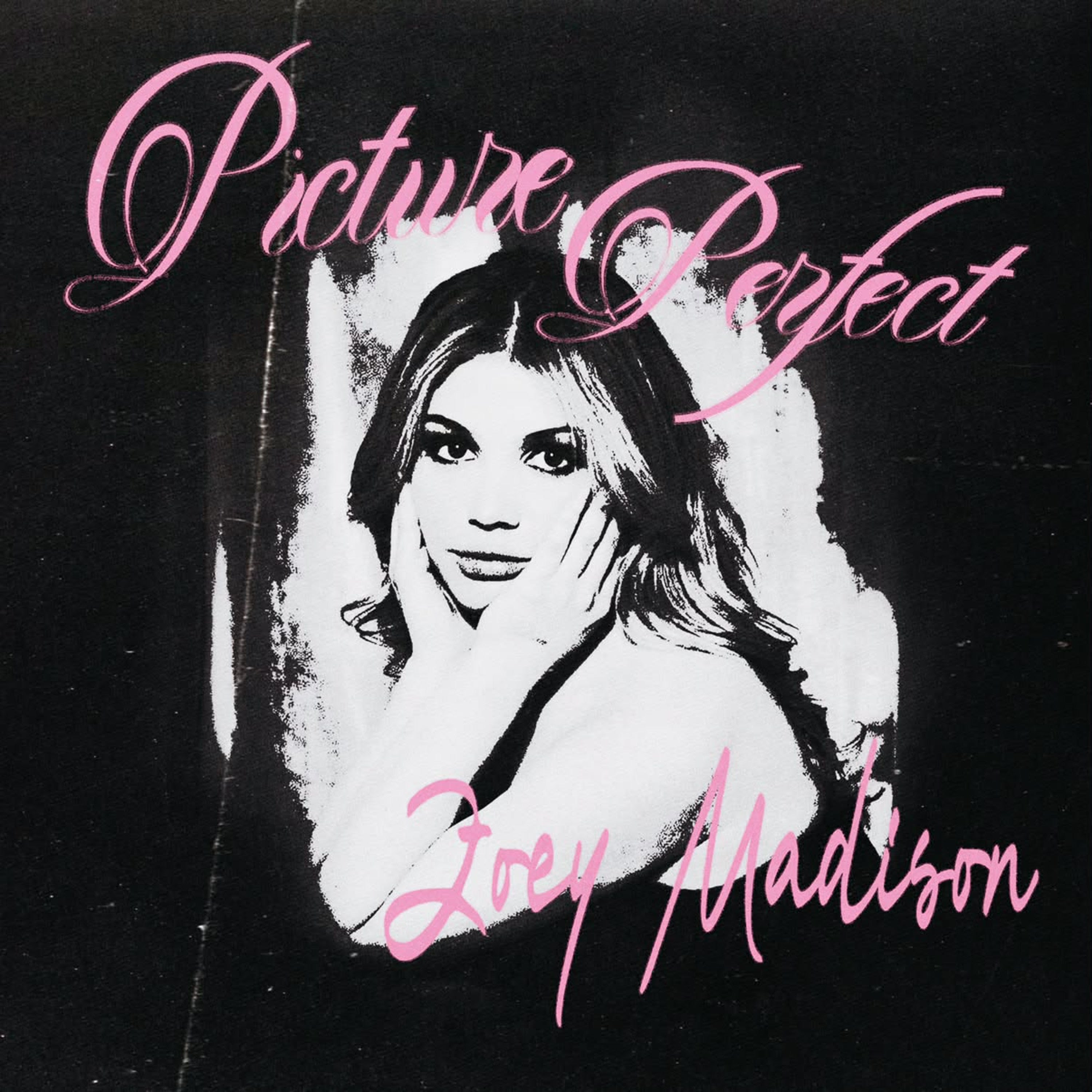
  • Zoey Madison Turns Romantic Illusion into Pop Gold with New Release “Picture Perfect”

    Beneath the upbeat rhythm of her latest single, the New York singer-songwriter explores the difference between falling in love with someone and falling in love with the idea of them.

    We all have a tendency to fill in the blanks when it comes to people we care about. We imagine how things might be, overlook the details that don’t quite fit and sometimes become so attached to the possibility of a relationship that we struggle to see what is actually in front of us. It is an interesting subject for a pop song, and one that New York-based singer-songwriter Zoey Madison takes on with considerable personality in her latest single “Picture Perfect”.

    There is no slow, sorrowful introduction or attempt to turn romantic disappointment into an overly dramatic affair. “Picture Perfect” arrives with an infectious rhythmic energy, immediately establishing a pop sensibility that makes you want to turn up the volume. It is only as the song unfolds that the more complicated story begins to emerge.

    The title itself gives us a clue. We tend to associate the phrase picture perfect with something desirable, something that has all the right ingredients and appears to have fallen neatly into place. But Madison is interested in the difference between appearances and reality. Her song is about the expectations we build around another person, and the rather uncomfortable moment when those expectations begin to crumble.

    The most revealing moment arrives in the bridge, where she sings, “I was holding on to a world that was made up in my mind.” It is a great line because it turns the focus inward. This isn’t simply a song about someone failing to live up to expectations; it is also about recognising how much of the fantasy we may have created ourselves. That is a more interesting place to take a relationship song, and it gives Picture Perfect an emotional dimension that sits nicely beneath its bright musical exterior.

    Madison’s vocals are another reason the track holds your attention. She possesses a four octave range and an extended whistle register, and she certainly knows how to use them. There are softer passages followed by bigger, more expansive moments where her voice takes centre stage. The bridge is particularly effective, giving her room to move through the different textures of her voice while keeping the song’s momentum intact.

    Madison has spoken about enjoying the recording process so much that she could have continued adding harmonies and layers long after the song was finished. Listening to the finished track, that makes perfect sense. The additional vocals give the arrangement its own character, and there is a sense that she has enjoyed exploring just how much she can bring to the recording.

    Produced by Matt Chiaravalle and co-written by Madison, Chiaravalle and Lauren Salvo, “Picture Perfect” follows the piano-led “Love Like You”, demonstrating that Madison is not interested in staying within one particular musical setting. Where that earlier release allowed her to explore a more expansive ballad arrangement, this single gives her a livelier backdrop and a different way of telling a story.

    Her musical influences include Mariah Carey, Whitney Houston, Barbra Streisand, Judy Garland and Ariana Grande, and there are clear traces of that appreciation for expressive, technically ambitious vocal performances in her work. Yet Madison’s growing identity as a songwriter comes from the subjects she chooses to explore and the way she approaches them. She is interested in the messy, contradictory parts of relationships, the things we tell ourselves and the moments when we finally see a situation differently.

    With three tracks from her debut EP, Electric, already receiving recognition in international songwriting competitions, Madison has been steadily building a catalogue that gives listeners different sides of her personality.

    “Picture Perfect” is an enjoyable addition to that catalogue. It has the rhythmic appeal of a good pop single, vocals that give plenty of personality and a story that becomes more interesting the closer you listen.

    Keep up with everything Zoey Madison on her Website