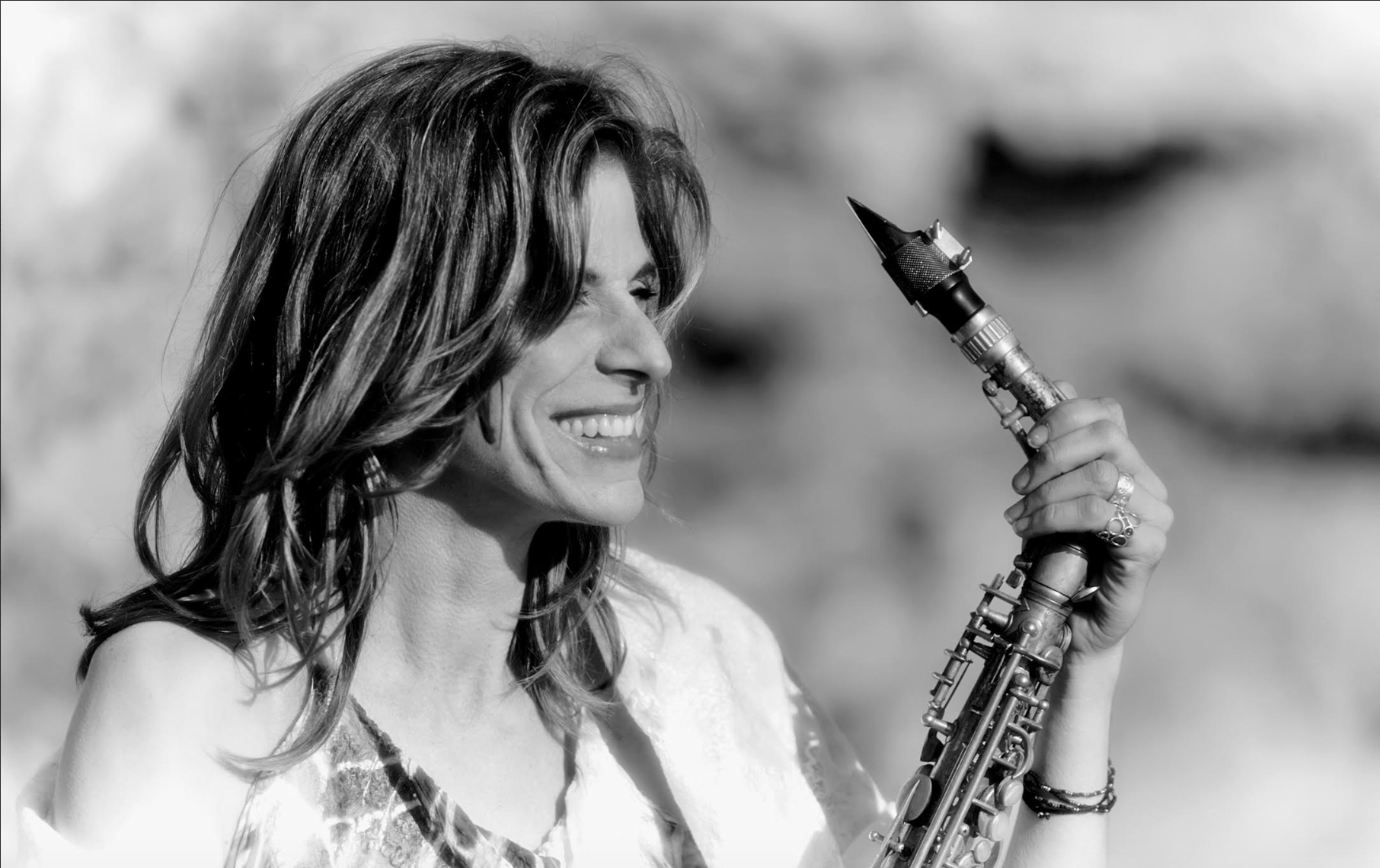
Muriel Grossmann’s Plays the Music of McCoy Tyner and the Grateful Dead, released today, December 29, 2025, is an album built on motion rather than declaration. It doesn’t announce its intentions or ask the listener to marvel at the unlikely pairing of its source material. Instead, it settles into a groove and lets the connections reveal themselves over time. This is music that assumes improvisation as a common language, not a stylistic device.
The idea of linking McCoy Tyner with the Grateful Dead has often been discussed in abstract terms—modal harmony, cyclical rhythm, extended forms—but Grossmann avoids theory-heavy gestures. Her approach is practical and embodied. These are pieces to be played, stretched, and lived inside. The quartet treats them not as historical artifacts, but as structures capable of sustaining new energy without losing their identity.
The album opens with Tyner’s “Walk Spirit Talk Spirit,” and from the outset, the emphasis is on continuity. The rhythm section establishes a steady, rolling undercurrent that feels almost meditative. Grossmann’s saxophone enters gradually, phrasing with restraint and intention. There is no rush toward intensity; instead, the performance accumulates weight through repetition and subtle variation. The spiritual character of the piece emerges not through drama, but through focus.
“Contemplation” continues this inward turn. The tempo relaxes, and the band allows space to play an active role. Grossmann’s tone is centered and warm, her lines shaped with care rather than urgency. The ensemble listens closely, responding to small shifts in dynamics and phrasing. The result is music that feels suspended, attentive to the moment, and quietly expansive.
The transition to the Grateful Dead material is seamless. “The Music Never Stopped” sheds its song-based familiarity and becomes a rhythmic framework, driven by pulse rather than melody. Radomir Milojkovic’s guitar avoids overt rock gestures, favoring repeating figures and open voicings that reinforce momentum. Abel Boquera’s Hammond B3 organ adds depth and texture, filling the harmonic space without overwhelming it. Uros Stamenkovic’s drumming anchors the groove while allowing elasticity, keeping the music in motion without forcing direction.
Closing the album, “The Other One” feels like a natural culmination of the record’s philosophy. Long associated with open-ended exploration, the piece aligns effortlessly with Grossmann’s aesthetic. Themes appear, dissolve, and reappear, guided by collective intuition rather than soloistic hierarchy. The performance resists climax, favoring flow and continuity instead. By the end, the piece feels unresolved in the best sense—open, ongoing, and alive.
What distinguishes Plays the Music of McCoy Tyner and the Grateful Dead is its refusal to frame itself as an experiment or a crossover. Grossmann does not attempt to translate one tradition into the language of another. She simply plays the music as part of her own continuum, allowing her established sound to act as a unifying filter. In doing so, she sidesteps nostalgia and novelty alike.
This album rewards patience. Its depth is not immediately dramatic, but it is lasting. With each listen, the internal logic of the performances becomes clearer, and the shared pulse between these seemingly distant musical worlds grows more apparent. Grossmann’s achievement here is subtle but substantial: she demonstrates that improvisation, when treated as a living practice, renders categories secondary. What remains is movement, connection, and an enduring sense of forward flow.
Connect with Muriel Grossmann
WEBSITE // INSTAGRAM // BANDCAMP// FACEBOOK // APPLE // TIDAL // SPOTIFY //YOUTUBE
 Cool Happy Genius Heroes