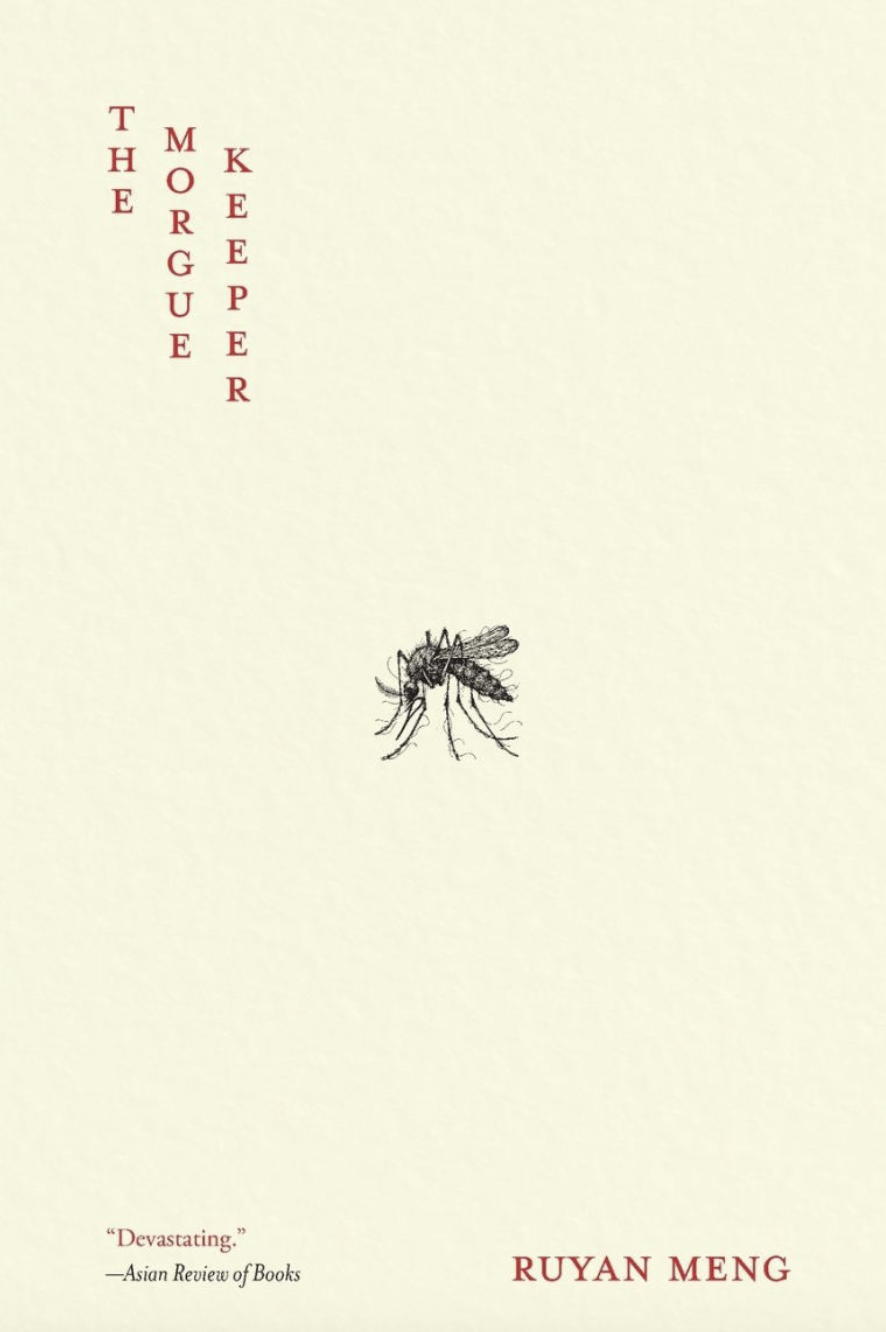
The Morgue Keeper by Ruyan Meng does something deceptively simple. It removes the megaphone.
Set during the Cultural Revolution, the novel doesn’t center on party leaders, revolutionaries, or ideological debates. Instead, it follows Qing Yuan, a morgue keeper whose job is to prepare the dead. That’s it. No speeches. No manifestos. Just bodies arriving in varying states of damage, many stripped even of names.
It’s a sharp narrative decision. In a period defined by noise—political, performative, violent—the morgue is silent. And in that silence, consequences pile up. Qing Yuan occupies a strange moral territory. He is not powerful enough to shape events and not aligned enough to justify them. He witnesses. He cleans. He absorbs.
When a woman labeled only “#19” is brought in, the anonymity becomes unbearable. The system’s language—numbers, categories, accusations—collapses against the physical reality in front of him. The novel pivots here, not into rebellion, but into awareness. Survival starts to look different once abstraction gives way to a single human cost.
Meng’s prose is controlled and unsentimental. There’s no indulgence in shock for its own sake. The horror lands precisely because it isn’t amplified. Ordinary gestures carry weight: a stretch before mounting a bicycle, a glance at the sun, a fleeting sense of freedom in the open air. These small acts of living exist alongside institutional cruelty without canceling it out.
Comparisons to existential classics are inevitable—there are shades of The Stranger in the moral isolation and hints of The Road in the stark pairing of violence and fragile grace—but The Morgue Keeper remains distinct in its focus. It is less interested in philosophical declaration and more interested in endurance as daily practice.
What lingers after reading isn’t a grand political statement. It’s a question: what does it take to preserve a sense of self when a system is designed to erode it? Qing Yuan doesn’t fight the state in any visible way. The resistance here is interior. It lives in memory, in restraint, in the refusal to let cruelty dictate identity.
Even the book’s design underscores the point. The pale cover and the poised mosquito seem almost understated until you realize how much damage something small can do.
The Morgue Keeper is not loud. It doesn’t need to be. Its power comes from narrowing the lens until history feels intimate and unavoidable. In that narrowing, it becomes difficult to look away.
 Cool Happy Genius Heroes