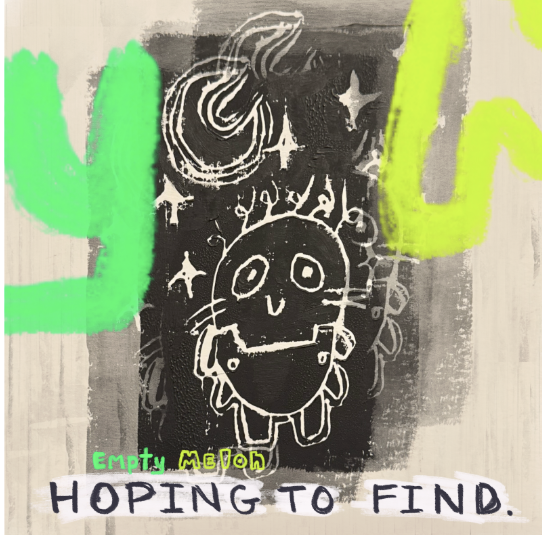
Born in Montreal’s DIY scene, Empty Melon (the solo project of Ada Lea bassist/producer Summer Kodama) introduces her debut single “Hoping to Find,” a cinematic, mellow, and emotionally introspective track that drifts between consciousness and dream. Rooted in ambient folk textures and experimental sensibility, the song captures a moment of creative reclamation and quiet self-renewal.
The first demo emerged in May 2024, shortly after Summer played bass for Michael Feuerstack. “It was such a fast, in/out type of experience,” she recalls. “I really enjoyed his music; he had a song called ‘Disenchanted’ that totally charmed me.” Inspired by the musicians around her, including Tim Crabtree and Erika Angell, Summer bought her first acoustic guitar from Tim before he relocated to Berlin. “I went home and the first iteration of this song was one of the first things to come out.”
At the time, she had been feeling burnt out from working as a side musician across multiple Montreal projects. “Writing this song helped me regain myself,” she says.
What sets “Hoping to Find” apart is its atmosphere. “The song is sort of like the space between being awake and being asleep,” she says. “It sits in a corner of my brain that allowed me to do whatever I wanted, in accordance with the feelings I held without judgement or parameters.” That in-between quality defines the track’s tone: cinematic yet intimate, ambient yet grounded in organic instrumentation.
The recording process deepened that sense of intention and collaboration. Summer first met Samson Wrote during a 2023 Joni Mitchell musical production in Ontario. Drawn to the “magical quality” of his albums Pigeon and In Season, she began shaping “Hoping to Find” with him in January 2025, working exclusively over Zoom. Samson later introduced her to mixing engineer JoJo Worthington and cellist Jill Sauerteig, whose contributions added further texture and emotional weight.
Stylistically, authenticity guided every decision. Summer points to the 1963 solo jazz album, Mingus Plays Piano, as a touchstone and an example of music that feels undeniably real. The raw guitar intro remains intentionally untouched. “I wanted it to feel like an old, lost, forgotten Polaroid,” she says. “I wanted this song to have a strong vibe above anything else. I wasn’t trying to be the perfect musician, I just wanted to be real.” At the same time, she notes she was meticulous about the details, balancing looseness with precision.
 Cool Happy Genius Heroes