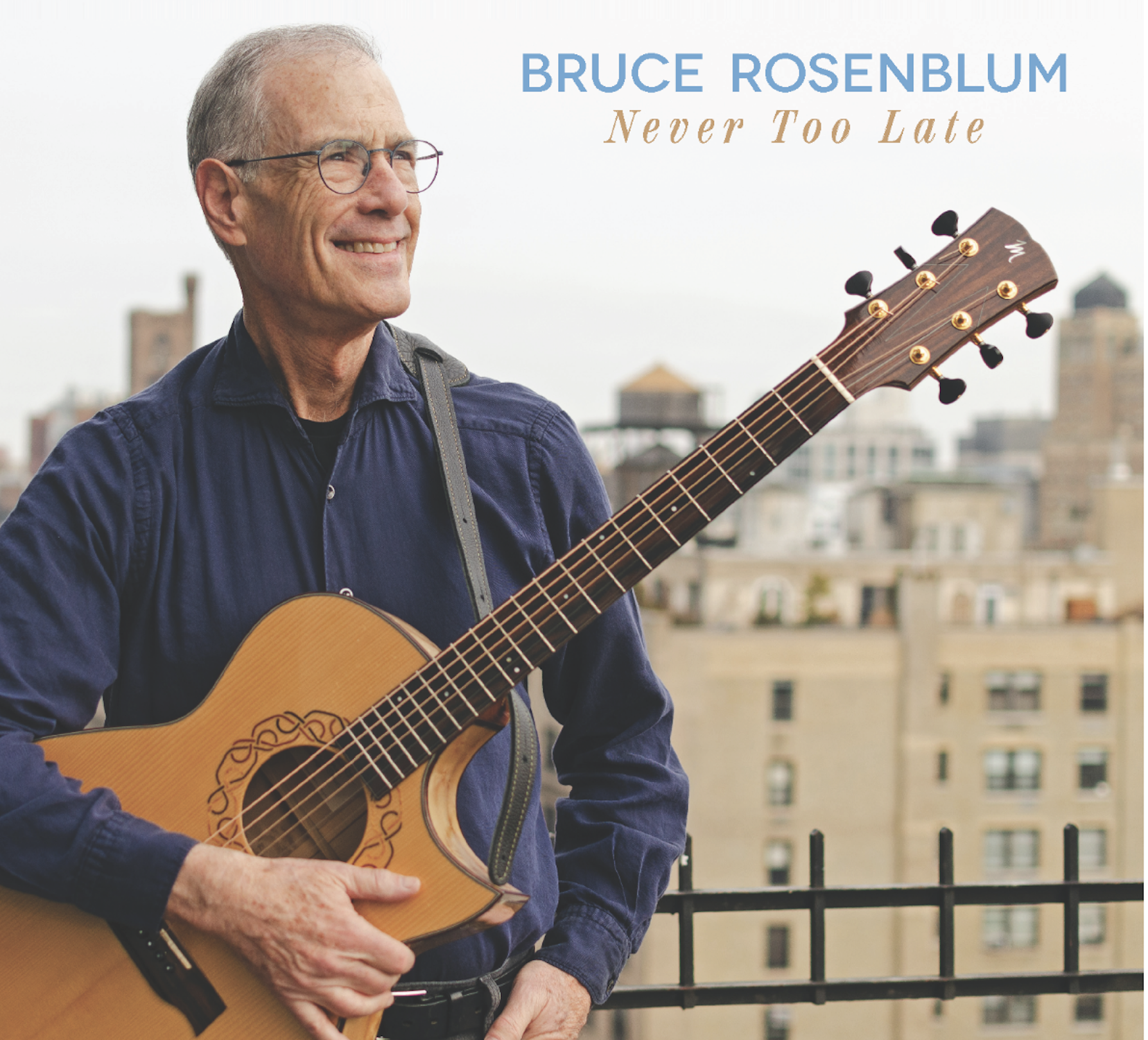
There’s often an assumption that albums born later in an artist’s life are reflective by default – gentler, perhaps, more reserved and content to look backward rather than push forwards. But Never Too Late, the latest release from Bruce Rosenblum, doesn’t quite follow that script. While it certainly carries the breadth of life experience, it also feels quietly exploratory, as though the act of returning to songwriting has opened as many doors as it has revisited.
This is definitely a songwriter’s record: guitar, voice and story are leading the way, but it doesn’t take long to realize that Rosenblum is less interested in staying within the traditional boundaries of the form than in stretching them. Folk and folk-rock may provide the foundation here, but the album moves easily through jazz inflected passages, country leaning textures and moments shaped by a classical sensibility. It’s not genre hopping for its own sake; rather, it feels like a natural extension of a musical language built over time.
Listen in here:
“My Way Home” opens the album with a sense of ease that proves deceptively effective. Written during the early days of lockdown, it captures that familiar feeling of being stuck, caught between intention and action. Yet it does so with a lightness of touch. A fingerpicked guitar pattern, touched with a hint of New Orleans jazz, provides the framework, while clarinet lines and a relaxed rhythm section give the track a conversational flow. There is a clear underlying message here that sometimes the hardest step is simply moving forward.
As the album unfolds, its three distinct musical threads begin to take shape. The jazz leaning tracks offer space and subtlety, allowing melodies to drift and settle in their own time. There’s a looseness here that feels intentional, as if the songs are inviting the listener into the process rather than presenting something fixed. In contrast, the country tinged folk-rock material brings a more grounded energy with fuller arrangements, warmer textures and a sense of forward motion that complements the reflective tone of the lyrics.
Then there are the ballads, which introduce a different kind of depth altogether. These songs lean into more intricate arrangements, often drawing on classical influences to create a richer sonic landscape. Strings are used not for grandeur, but for nuance, adding emotional shading without overwhelming the intimacy that defines the record. It’s in these quieter moments that Rosenblum’s sense of restraint becomes most apparent.
What ties all of this together is a consistent voice. Not just vocally, but creatively. Rosenblum doesn’t oversell his material; his delivery is measured, allowing the songs to speak for themselves. And lyrically he leans more towards observation as he explores themes of love, uncertainty and personal reflection with a clarity that is not overly imposed.
There is also a sense that, through Never Too Late, that these songs are lived in. They are not rushed or overly producer; instead they have the marks of revision and of ideas tested and refined over time. This patience does pay off, and gives the album a cohesion that might otherwise be lost in its stylistic range.
Overall, Never Too Late is less about reinvention than it is about re-discovery. It’s an album that understands where it comes from but isn’t constrained by it, one that allows experience, curiosity and craft to coexist. And in doing so, Bruce Rosenblum delivers a collection of songs that feel both grounded and open-ended, proving that sometimes the most compelling journeys are the ones that begin again.
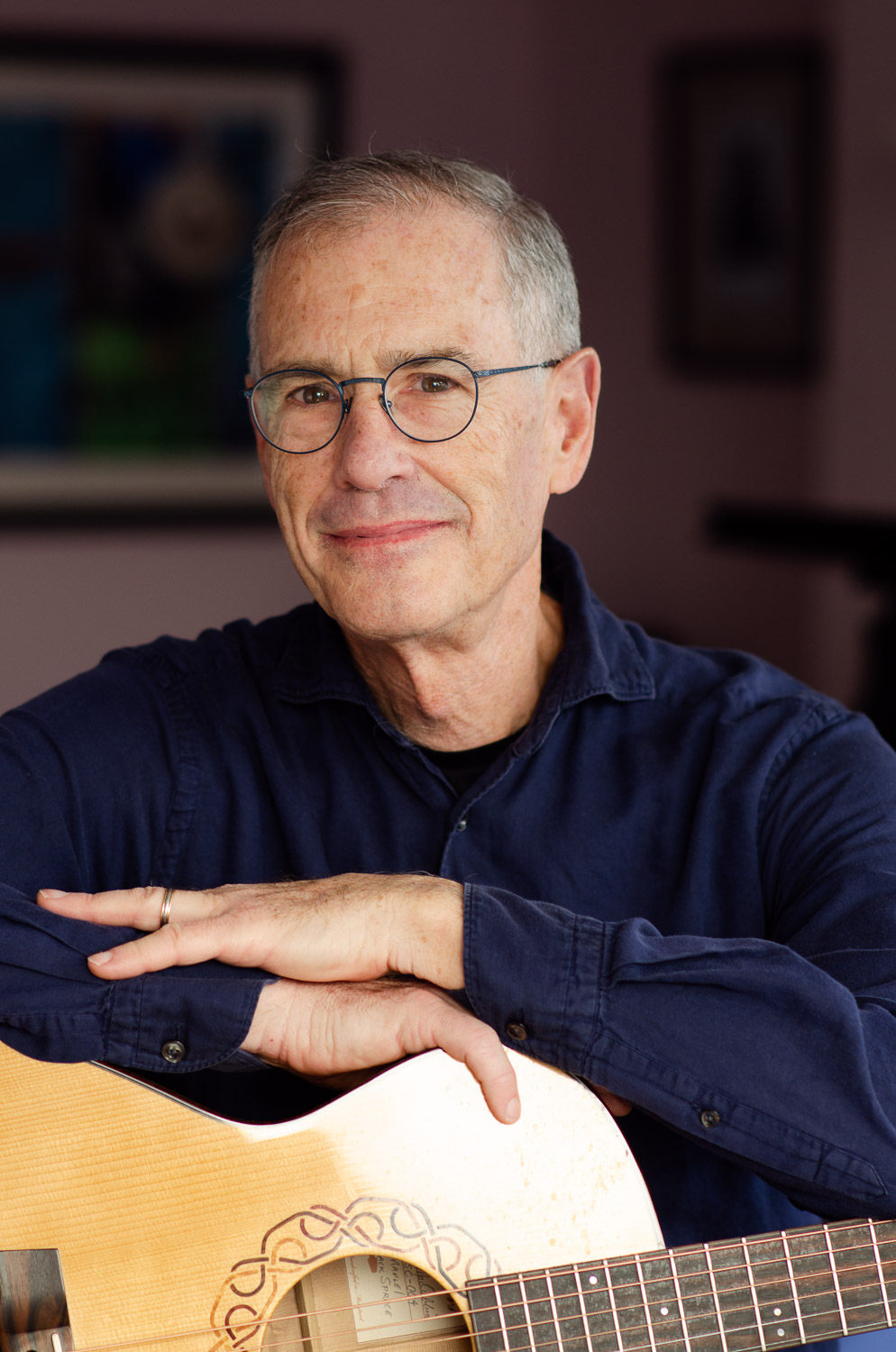
About Bruce Rosenblum
Bruce Rosenblum’s relationship with music began early, with piano lessons at age six and a deep immersion in performance and songwriting throughout his youth. As a teenager, he was active in the Boston area folk scene as part of the duo Yamakraw, performing regularly and sharing stages with artists including Livingston Taylor, Phil Ochs and Steeleye Span.
His musical path broadened at Yale University, where he studied double bass with renowned soloist Gary Karr performed as principal bassist in the Yale Symphony, and served as music director of the Yale Whiffenpoofs, creating vocal arrangements that remained in their repertoire for years. His interests extended beyond performance to composition, theory and even the carillon, earning him early admission to the Guild of Carillonneurs in North America.
After graduation, Rosenblum made the pragmatic decision to pursue a career outside of music, attending law school and going on to clerk for Chief Justice Warren Burger before building a successful career in law and later in business with The Carlyle Group. Throughout those years, music remained a constant presence – whether through informal performance, family collaborations, or leadership roles in arts organizations, including Washington Performing Arts and the Heifetz International Music Institute.
In recent years, he has returned more fully to music, both as a performing bassist in the Washington, DC area – appearing with ensembles such as the Avanti Orchestra and Tempo Giusto – and as a songwriter. His renewed creative output began during the COVID-19 lockdown, when he committed to writing regularly ultimately leading to a growing catalog of original songs and recognition in competitions such as the Mid-Atlantic Song Contest.
Never Too Late represents the culmination of that return: a genre spanning collection that reflects a lifetime of musical experience, blending folk, jazz, and classical influences into a voice that is both thoughtful and distinctly his own.
Follow Bruce Rosenblum on his Website
Stream music on Spotify and Apple Music
 Cool Happy Genius Heroes