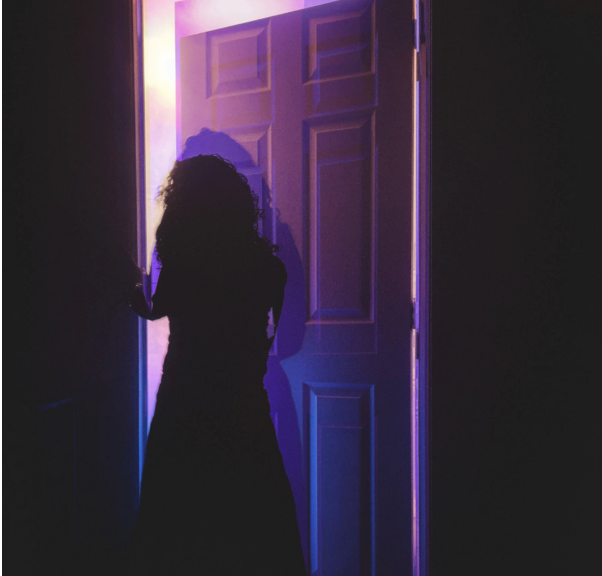
Following on the releases of acclaimed singles “Let Me Go” and “News at the Party” earlier this year, both of which garnered Spotify Editorial support, Montreal singer-songwriter Libby Ember returns with “I’ll Stand in the Doorway.” Amidst heart-sinking melancholy, it captures the emotional limbo of moving through a breakup while remaining tethered to someone’s world. Wrapped in dreamy, bedroom pop textures, “I’ll Stand in the Doorway” explores longing, proximity, and the quiet tension of being emotionally outside looking in.
Inspired by a real experience following a breakup, “I’ll Stand in the Doorway” reflects the strange emotional state of navigating a shared neighbourhood with an ex. Libby describes walking through familiar streets while on edge, bracing for the possibility of unexpected encounters and the resurfacing of memory in everyday spaces.
At its core, the song’s title becomes a metaphor for emotional boundaries and lingering attachment. It reflects the feeling of not being able to step back into someone’s life, while still holding space for reconnection. “I can’t actually step back into the room, someone’s life,” Libby explains. “But I’m telling them that I’ll never be far away and if they ever want to let me back in, I’ll be ready.”
Sonically, the track leans into a fuller, more immersive production style than Libby’s earlier releases. Built from layers of electric guitars, synths, and drums, the arrangement mirrors the intensity of crowded thoughts and unresolved emotion. Rather than stripping things back, the production embraces density to reflect how sadness can feel amplified rather than simplified.
“We wanted the song to feel very full,” Libby says. “When I hear a sad song that’s packed with elements, it really gets me right where it hurts.”
A defining aspect of the track’s creation is Libby’s close collaboration with her father, Eldad Tsabary, who has taken on recording and production duties across her recent work. His detailed, intuitive approach helped shape the song’s layered emotional landscape, allowing space for nuance, texture, and precision.
“My dad has a very strong and creative ear for small details,” Libby explains. “It’s just a cool experience to watch him work, especially because it’s very easy to communicate exactly what I want to him.”

