Music has a strange habit of making opposites coexist. Darkness can sound beautiful, sadness can make you dance and a song can leave you unsettled while simultaneously putting a smile on your face. Perhaps that is one of the reasons we keep returning to music: it doesn’t always demand that emotions make sense before it allows us to feel them.
Listening to Brooks John Martin’s new single ‘Do’, you find yourself somewhere between exhilaration and bewilderment. There are guitars, atmosphere and that wonderfully dreamy baritone, but everything else seems to be in motion: thoughts colliding, moods shifting and logic taking the afternoon off. Martin calls it “non-linear Lewis Carroll nonsense”, and it is a description that feels increasingly appropriate the further the song takes you.
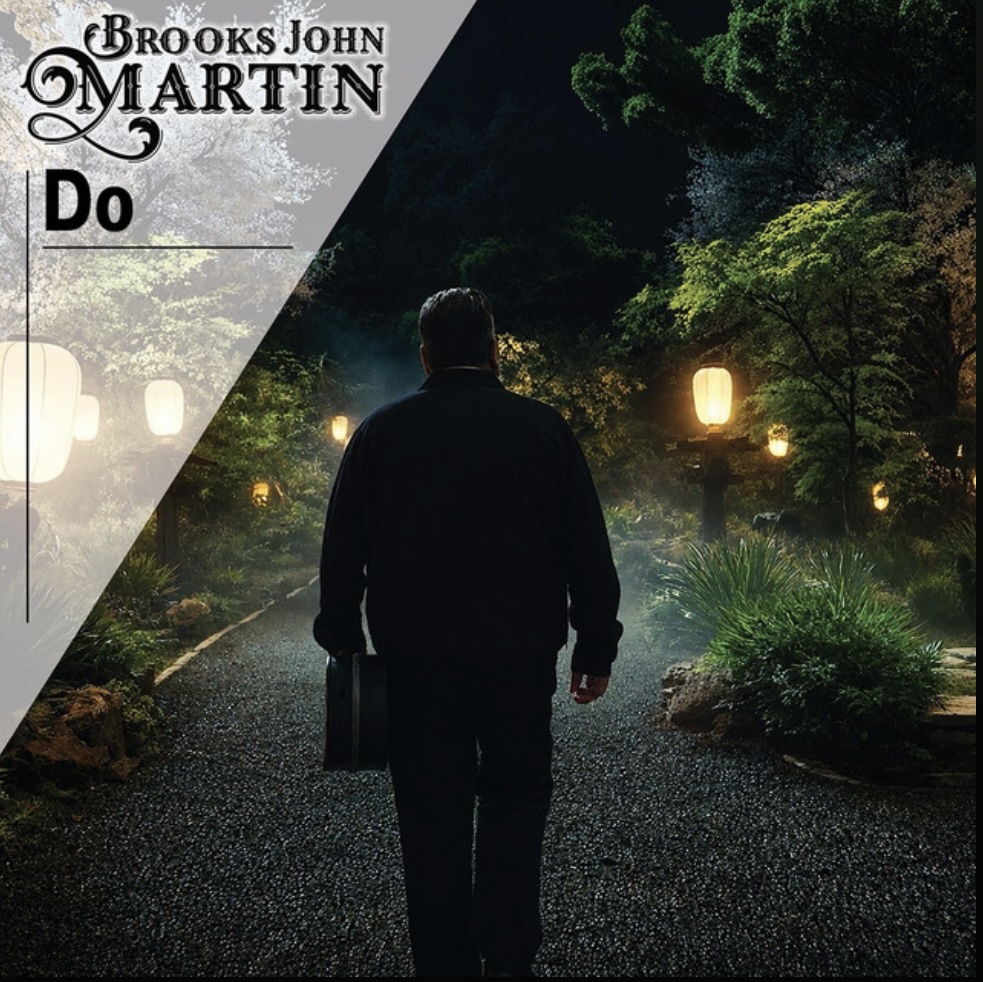
‘Do’ is the first single and video from Martin’s forthcoming album War All The Time, and it is hardly the sort of release that politely introduces an album before stepping aside. It arrives already in full flight, taking the emotional complexity of a manic arc and approaching it from a surprisingly upbeat perspective. There is something almost gleeful about its momentum, as though the song is deliberately refusing to become weighed down by the seriousness of its subject. Martin has described it as arguably the happiest song ever written about a manic arc, and while that sounds like a contradiction, it becomes remarkably convincing once you hear the track.
Listen here:
The happiness here is not uncomplicated. There is exhilaration, certainly, but also excess, unpredictability and the sense that an emotional high can become destabilising when it gathers enough momentum. Rather than separating those experiences, Martin allows them to exist simultaneously. Thoughts tumble over one another, moods shift without warning and ideas connect through association rather than conventional narrative logic.
That approach has long been part of Martin’s songwriting. He has tended to favour lyrics that communicate moods and sensations rather than spelling everything out through straightforward narratives, allowing songs to develop through imagery, atmosphere and emotional association. On ‘Do’, that instinct seems particularly well suited to the subject. If the experience itself doesn’t unfold in a neat sequence, why should the song describing it? Martin’s unconventional structure therefore feels less like a deliberate rejection of songwriting convention and more like an attempt to make the music behave in a way that reflects the emotions at its centre.
His voice provides a crucial sense of continuity within all that movement. Martin’s dreamy baritone has a romantic quality that recalls the vocal traditions of post-punk, new wave and Brit-pop. On previous releases, he has often placed that vocal presence against crunchy alternative rock guitars, creating an effective contrast between rougher instrumental textures and the warmth and weight of his singing. Those elements remain recognisable on ‘Do’, but they are being pushed into a more playful and surreal environment.
The accompanying music video takes that sense of unreality even further. Created entirely with AI, it transports Martin into a stylised interpretation of 1960’s Japan, creating a colourful and deliberately artificial world in which reality and imagination continually overlap. Rather than attempting to make the technology disappear behind conventional cinematic realism, the video embraces its strangeness.
And then there is Tom Jones. At Martin’s specific request, his own likeness appears dancing like the legendary singer during the video’s closing sequence, culminating in an extended final burst of movement that brings its comedic side fully to the forefront. It is an absurd detail, but within the world of ‘Do’ it makes complete sense. After spending the video moving through a surreal interpretation of 1960s Japan, why shouldn’t the final destination be Brooks John Martin dancing like Tom Jones?
The humour is important. There is a particular confidence required to allow something emotionally complicated to become genuinely funny without turning the experience itself into the joke. Martin manages that balance by refusing to separate the serious from the absurd. As he puts it, “‘Do’ is the happiest song I could write at the top of a manic arc, dressed up as 1960s Japan, ending with 30 seconds of me dancing like Tom Jones. Honest, even the absurd parts. Especially the absurd parts.” That final thought perhaps gets closest to the heart of the song.
Martin’s musical foundations stretch back decades. He began learning piano at eight and guitar at 14, developing an early relationship with both melody and the physicality of playing. Those beginnings have evolved into a sound shaped by alternative rock, atmospheric songwriting and the romantic vocal traditions that run through new wave, post punk and Brit pop.
What is interesting about ‘Do’ is that none of those established characteristics have disappeared; instead, they have been given permission to become considerably less restrained. The dreamy voice remains, the guitars retain their edge and the cinematic atmosphere is still present, but the overall emotional temperature has changed.
That makes ‘Do’ an intriguing introduction to War All The Time. The album title suggests conflict, pressure and sustained intensity, yet its first glimpse arrives with a grin, a surreal AI-generated world and an unexpected Tom Jones dance routine. The contrast raises the possibility that Martin is less interested in presenting difficult experiences from a single emotional perspective than in capturing the full, contradictory reality of them. If ‘Do’ is anything to go by, War All The Time may be an album where melancholy and humour, beauty and absurdity, vulnerability and exuberance are allowed to occupy the same space.
Find out more about Brooks John Martin on his Website

