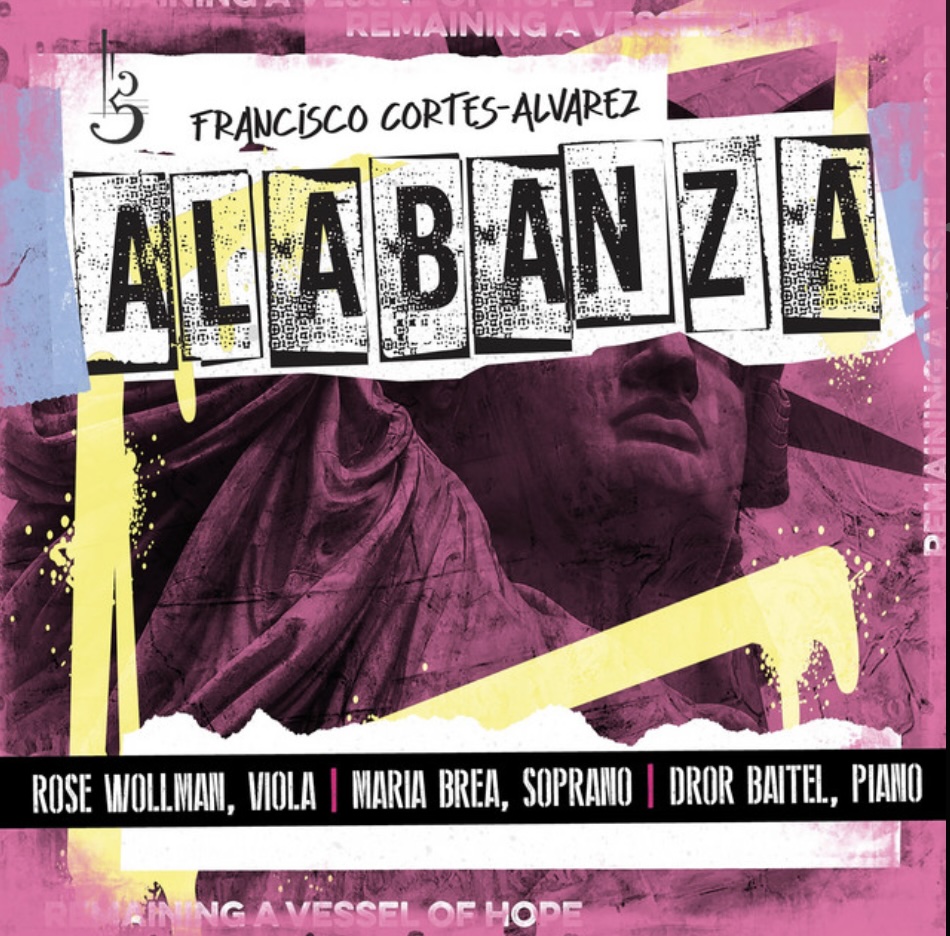
Music can tell a story in so many different ways. Sometimes the words lead us, sometimes it is the melody, and sometimes it is simply the atmosphere created by the instruments themselves. With Rose Wollman’s new single “Alabanza”, all three come together in a piece that is as much about memory and human connection as it is about the events that inspired it.
Written by Mexican composer Francisco Cortés-Álvarez and performed by Wollman with soprano Maria Brea and pianist Dror Baitel, “Alabanza” sets Martín Espada’s Alabanza: In Praise of Local 100, a poem about the Latin American kitchen workers who were working in the World Trade Center on September 11, 2001.
What makes the piece particularly affecting is that it begins with the everyday. There is rhythm and movement, the energy of a working kitchen, the repetition of familiar tasks and the sense of people simply getting on with their day. The piano establishes much of that momentum, while the viola and soprano gradually become part of this constantly moving soundscape.
As the piece develops, those rhythms begin to fracture. What initially feels energetic and purposeful becomes increasingly unstable before suddenly giving way to an eerie stillness. The contrast is extraordinary. The music seems to stop and take a breath, and in that silence the enormity of what has happened becomes far more apparent than it might have been through a conventional musical climax.
Cortés-Álvarez has created something that feels very physical here. The piano can sound percussive and almost industrial, while Wollman’s viola moves between warmth, agitation and some remarkably unusual textures. Brea’s soprano sits somewhere between voice and another instrumental colour, sometimes carrying the narrative directly and sometimes becoming part of the wider landscape.
There is a real sense of exploration throughout, and perhaps that shouldn’t be surprising given Wollman’s own approach to the viola. She has spent much of her career commissioning new work and finding ways to push the instrument beyond the expectations that often surround it. Here, she and Cortés-Álvarez seem to have given each other permission to explore what the combination of viola, piano and voice can actually sound like.
Wollman has described the experience of hearing Cortés-Álvarez’s writing as discovering sounds from the three instruments that she didn’t know existed. There are passages that feel almost abstract, where the traditional distinction between melody and accompaniment seems to disappear completely. But there is always a story underneath it.
The relationship between the music and Espada’s poem is particularly interesting because the composition doesn’t simply illustrate the words. Instead, it creates another layer of meaning around them. The opening rhythms establish the ordinary world of the workers, and when that world disappears, the music itself seems to lose its bearings.
Later, a darker pulse emerges, becoming a kind of drumbeat of war. It is an effective musical idea because it connects the immediate events of the poem with everything that followed. The rhythms of work have become something else entirely.
There is also a wider significance to “Alabanza” when considered as the first release from Wollman’s forthcoming album Becoming America. The album brings together five newly commissioned works for viola, soprano and piano, exploring different perspectives on American life.
That feels particularly important here. September 11 has been discussed, analysed and represented countless times, but “Alabanza” asks us to look at the event from a very particular perspective. These were people working in kitchens, preparing food, thinking about their families and carrying on with ordinary lives. Their stories existed before the historical event and continued to matter afterwards. The music captures that sense of humanity beautifully.
There is a temptation when dealing with a subject as familiar and emotionally loaded as September 11 to make the music overwhelmingly dramatic. “Alabanza” takes a different route. Its most powerful moments often come through atmosphere, contrast and absence. The silence can say as much as the noise, and the strange, fragmented textures following the initial rupture leave plenty of room for the listener’s imagination.
It is also a piece that benefits from being experienced rather than explained. You can listen to it through the lens of the poem and its historical context, or you can simply listen to the changing relationship between the three musicians. The music moves from rhythm to stillness, from recognisable musical gestures into something more elusive, and eventually towards a darker, more reflective space.
And perhaps that is why “Alabanza” stays with you. Beneath the contemporary textures and unusual instrumental sounds is something very simple: people going about their lives, unaware that everything is about to change. There is much grief here, certainly, but also memory and an insistence that the individual stories within history should not be forgotten.
With Becoming America due to follow later this month, “Alabanza” feels like a compelling introduction to Wollman’s wider project. It asks difficult questions without attempting to answer them for us, and it demonstrates just how expressive the viola can become when placed in an unfamiliar musical landscape.
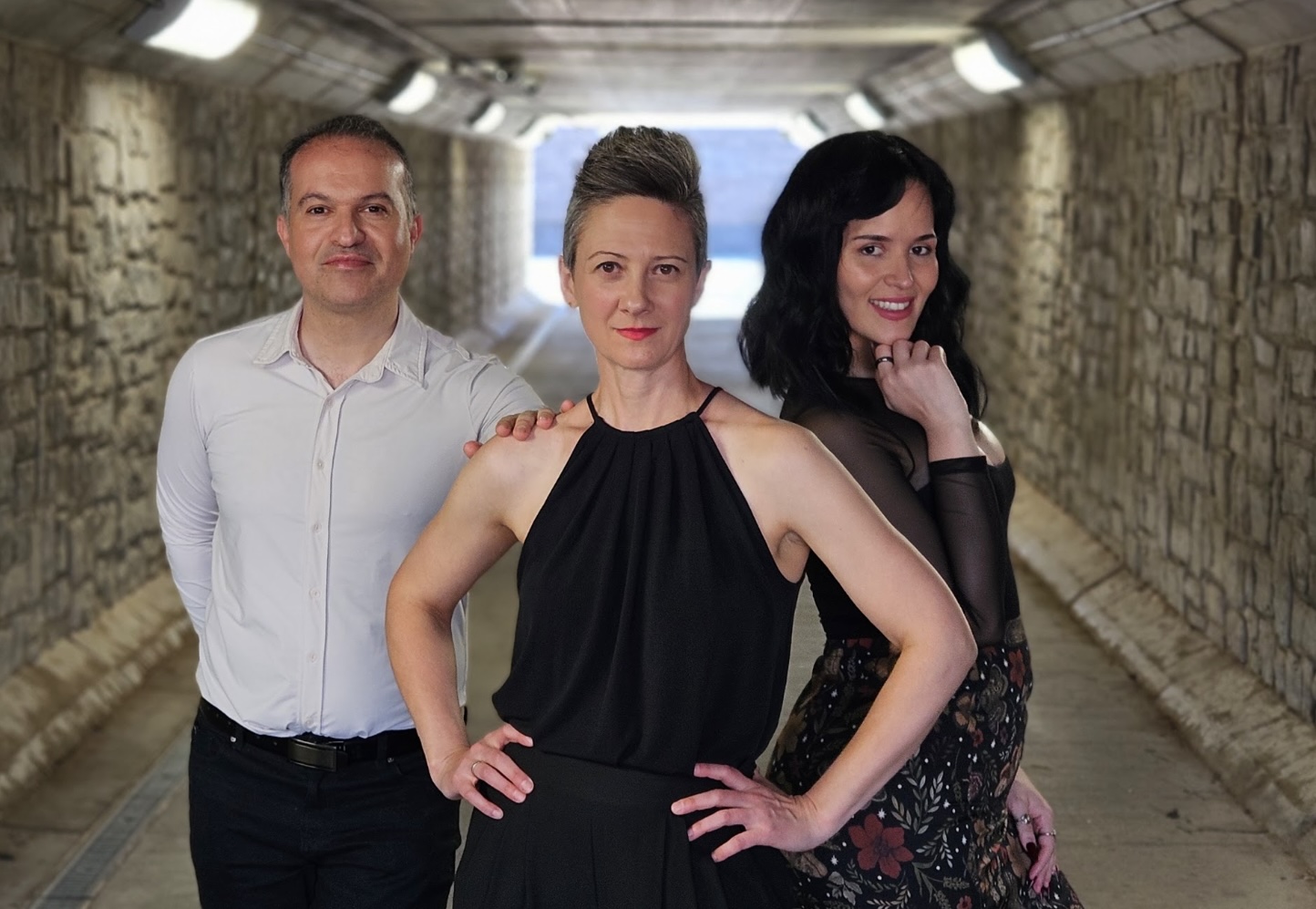
About Rose Wollman
Rose Wollman is an acclaimed violist, composer and champion of contemporary music whose career has been defined by a willingness to explore new possibilities for her instrument. Hailed as “innovative” and “stylish” by the Chicago Classical Review, she has performed at venues including Carnegie Hall, Suntory Hall and KKL Switzerland and has commissioned and premiered more than twenty new works for viola.
Her collaborations have included composers such as Pierre Boulez, Augusta Read Thomas, Garth Knox, Don Freund, Atar Arad, Gabriela Ortiz and Mario Lavista. Her recordings include Loop: Ligeti’s Inspiration & Legacy, Partita Party and Breaking Glass Ceilings: Music by Unruly Women. She is Assistant Professor of Viola at Colorado State University and serves on the board of the American Viola Society.
Becoming America is the third release on Wollman’s SBOV Music label, “Sounds Better on Viola”, continuing her work of commissioning new repertoire and exploring the viola as a contemporary and versatile musical voice.
Find out more on her Website

