
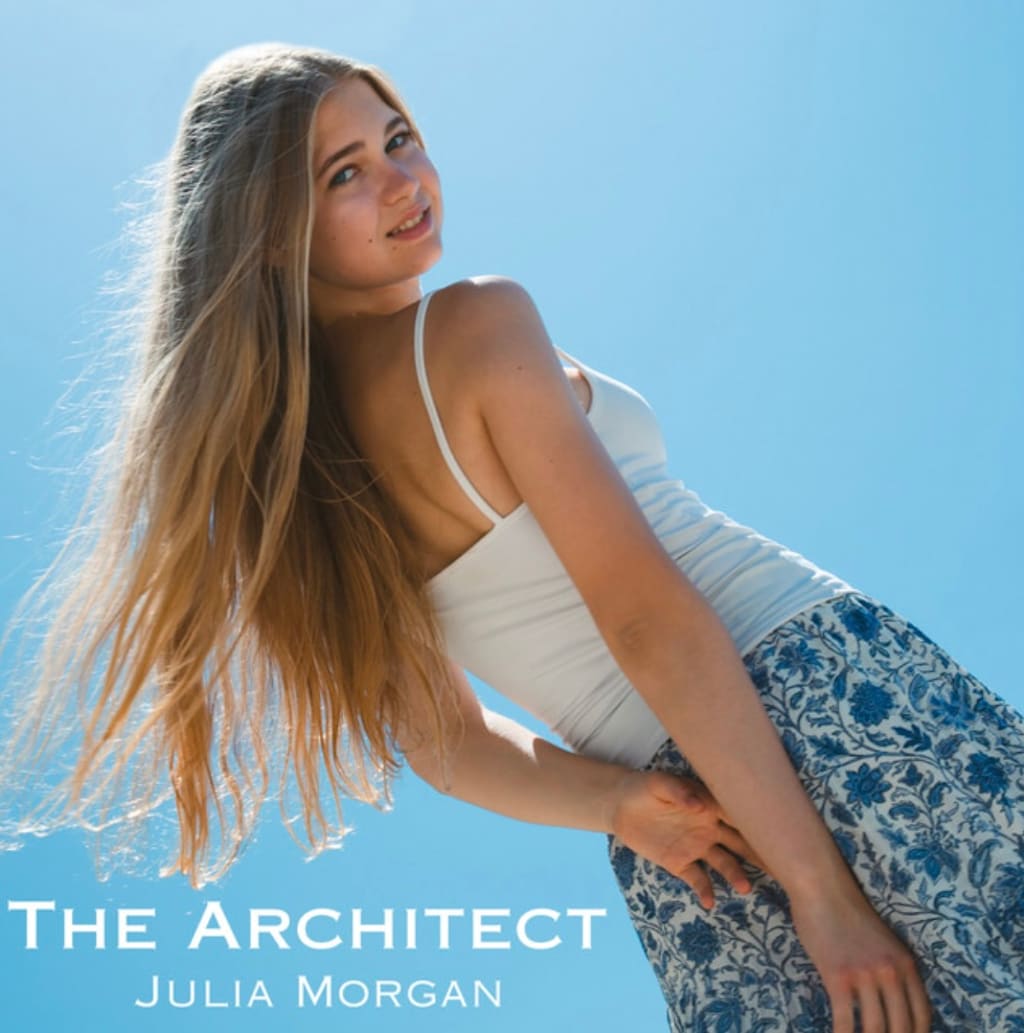
Blending cinematic indie-pop with candid songwriting, Julia Morgan turns the uncertainties of growing up into a thoughtful nine-track portrait of identity, ambition and finding your place in the world.
Some artists spend years trying to work out what they want to say. Julia Morgan has taken a rather interesting route, using her debut album to explore the questions that have been following her since childhood.
Released as a nine-track collection, The Architect is a record about identity, the expectations we place upon ourselves and the sometimes uncomfortable business of growing into the person we want to become. It is also an album with a rather lovely story behind its name.
Growing up, Morgan kept a copy of Julia Morgan Built a Castle, the children’s book by Celeste Davidson Mannis beside her bed. It told the story of the pioneering architect who became California’s first licensed female architect and went on to design more than 800 buildings, including the famous Hearst Castle. Sharing a name with such an extraordinary woman was always an interesting coincidence, but as Morgan grew older, her namesake’s story began to take on a different significance. The idea of designing and building something of your own became a way of thinking about life itself.
That idea sits at the heart of The Architect. Morgan is interested in the things that shape us: family, friendships, insecurity, ambition, loss and the expectations of those around us. She approaches these subjects with an openness that makes the record feel personal without becoming inaccessible.
Working alongside LA based songwriter and producer Stella Smyth, who has mentored Morgan for several years, she has created a collection that gives her writing plenty of room to develop. All nine songs were co-written and executive produced by the pair, with the arrangements bringing together contemporary pop production, atmospheric textures, strings and more intimate instrumental passages. There is a cinematic quality to much of the album, but the songs remain rooted in Morgan’s own experiences.
“Performing” is one of the clearest examples of what makes this project interesting. On the surface, it explores the familiar pressure of comparing yourself with other people and feeling that you must constantly prove your worth. But there is a more personal story behind it. Morgan previously gave up ballet after becoming self-conscious about her dancing alongside other young performers with more experience and technical ability. The experience stayed with her, eventually finding its way into a song about the different roles we adopt in order to feel accepted.
Social situations, friendships and everyday interactions can all become occasions where we feel obliged to be entertaining, confident or agreeable, even when our emotions tell a different story. Morgan explores that tension with an understanding of how easily we can lose sight of ourselves while trying to live up to other people’s expectations.
There are other moments where Morgan turns inward. “Before the Grave” is a particularly affecting piano led ballad, its gentle and almost conversational vocal delivery creating an intimate atmosphere. The song considers mortality, memory and the longing for a future that feels more hopeful. Rather than relying on grand gestures, it allows its emotions to emerge gradually with a haunting chorus that gives the subject matter a lingering quality.
“Fallen Leaves” takes a different route, exploring the complicated emotional connections between mothers and daughters and the ways in which experiences can be passed from one generation to another. Its ethereal folk qualities suit the subject beautifully while the writing shows an interest in understanding family relationships beyond their most obvious expressions. It is a thoughtful piece of songwriting that adds another layer to the album’s wider exploration of identity.
The title track brings everything back to the person who inspired the record in the first place. With its moody pop waltz and atmospheric arrangement, “The Architect” feels much like a conversation between two women separated by generations but connected by a name and an idea. Morgan looks at the remarkable achievements of her namesake while considering the possibilities ahead of her.
One of the more interesting aspects of Morgan’s music is the contrast between the emotions expressed in her songs and the other parts of her personality. She is also an actress and comedian, with an impressive background that includes Broadway’s Anastasia, HBO’s Divorce opposite Sarah Jessica Parker, and comedy projects alongside Colin Jost, Wanda Sykes, Neil Patrick Harris and Rachel Dratch. Her comedic videos have attracted more than a million views, and she regularly performs stand-up, including hosting a charity fundraiser at New York’s Comic Strip Live.
It would be easy to assume that someone with such an outgoing performing background would approach music in much the same way. Instead, The Architect reveals a more introspective side, one that is willing to explore feelings that are not always easy to discuss. Morgan understands that humour and sadness are not mutually exclusive and that the person people see in public is rarely the complete picture.
That understanding gives the album much of its appeal. These songs are concerned with the private conversations we have with ourselves, the things we sometimes struggle to admit and the process of learning that we do not have to be everything to everyone. There are familiar influences in the music, with shades of Lana Del Rey, Billie Eilish and Gracie Abrams appearing in its more atmospheric and confessional moments, but Morgan’s own experiences give the material its identity.
It is also worth recognising how much of this album has grown out of a creative relationship that began when Morgan was just eleven. During the pandemic, she picked up a ukulele and started writing songs with the few chords she knew. Her parents subsequently introduced her to Smyth, then a young songwriter studying music at NYU. What began as mentorship developed into a longstanding collaboration, eventually taking the pair to Los Angeles to record the material that would become The Architect.
That history is present throughout the album, which feels like the work of an artist who has been given the time and encouragement to discover her own voice. It is not trying to offer a definitive account of who Julia Morgan is. Instead, it captures a young woman asking questions, revisiting old insecurities and looking towards the future with a growing sense of confidence.
For a debut, it is both ambitious and revealing. More importantly, it gives us a sense of an artist with plenty left to say. Julia Morgan may have started out with a book about a woman who built castles, but with The Architect, she has begun constructing something entirely her own.

About Julia Morgan
Julia Morgan is a New York based singer-songwriter, actress and comedian whose creative career spans music, Broadway, television and stand-up. Her debut album, The Architect, is a nine-track collection of cinematic indie-pop exploring identity, vulnerability, family relationships and self-discovery.
Co-written and executive produced with longtime mentor and LA-based producer Stella Smyth, the album takes its inspiration from Julia’s namesake, the pioneering architect who designed Hearst Castle and became California’s first licensed female architect.
Julia began writing songs at eleven during the pandemic, developing her musical voice through a creative partnership with Smyth. Alongside her music, she has built an impressive acting career, appearing as the Little Anastasia understudy in Broadway’s Anastasia and guest-starring opposite Sarah Jessica Parker in HBO’s Divorce. Her comedy work includes Audible’s Trust Fall, featuring Colin Jost, Wanda Sykes, Neil Patrick Harris and Rachel Dratch, as well as The Best Man’s Ghost Writer with Glen Powell. A working stand-up comedian, Julia also organises and hosts an annual fundraiser for New York City food charities at Comic Strip Live. Across her different creative pursuits, she brings humour, curiosity and emotional honesty to her work, with The Architect marking an exciting new chapter in her career.

