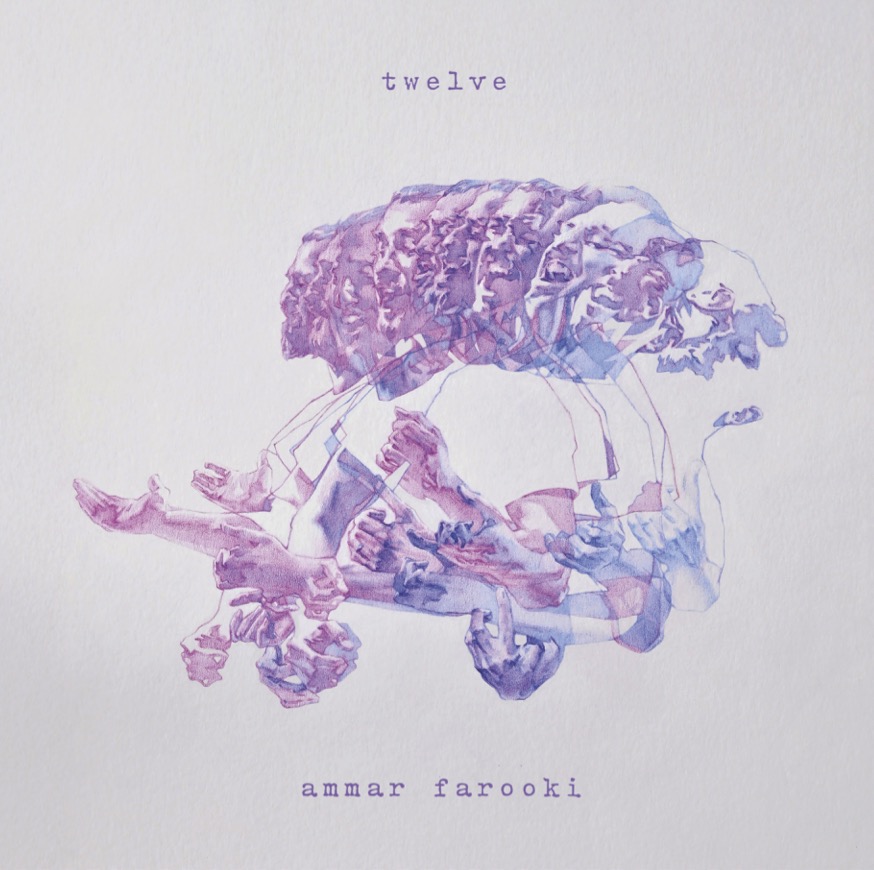
Some artists are defined by scenes. Others by cities. Ammar Farooki resists both. Instead, his work moves like a thread between places – Lahore, New York and all os the emotional terrain in between. And he carries with it a sense of constant transition rather than fixed identity.
Across years of writing, performing, and rebuilding his sound in different corners of the world, Farooki has developed into an artist less interested in resolution than reflection. His music doesn’t arrive with answers so much as a willingness to sit inside the questions – questions about belonging, memory, change and what it means to keep becoming someone new while still carrying everything that came before.
Born in Lahore and shaped through years spent between Pakistan and the United States, Farooki’s journey has unfolded less like a linear career path and more like a series of necessary departures. From early performances at LUMS, where he first became active in the university’s Music Society, to forming collaborative bands with some of Pakistan’s most recognizable contemporary musicians, his foundation was built in a scene defined by experimentation, community and a shared ambition. Those early years led to moments that now feel foundational: the sold-out “Almost Famous” show in 2009, and a growing reputation as both performer and creative collaborator, including his early work directing music videos alongside Taimoor Salahuddin.
But it was the release of “Caveman” from his debut EP Songs From The Cave that marked a clearer arrival. Shot in the vast, cinematic landscapes of Gilgit-Baltistan, the track carried an emotional scale that matched its geography — a sense of searching, isolation, and self-definition. The song’s reception, including coverage from Rolling Stone India and Forbes, positioned Farooki as part of a new wave of South Asian artists beginning to speak to audiences far beyond their immediate geography.
What followed was not a pivot, but an expansion. After completing his studies in the United States and eventually relocating to New York City in 2019, Farooki embedded himself into one of the most demanding and competitive independent music ecosystems in the world. Rather than chasing industry shortcuts, he built a live presence the traditional way — through constant performance. Venues like Rockwood Music Hall, Pianos, The Bitter End, and The West End Lounge became part of a growing circuit, alongside appearances at Sofar Sounds and the American Folk Art Museum.
There is a certain consistency in how Farooki approaches music: less as product, more as process. Whether performing solo or with a rotating ensemble of New York based musicians, including collaborators like Dudley Music, his work tends to sit in a space between more intimate places and expansion into bigger territory. Songs often begin quietly, almost conversationally, before opening into something more reflective.

Over time, his role in the New York scene has extended beyond performance. In Greenpoint, Brooklyn, he has helped cultivate small, community driven live music spaces at venues like Class & Co., Paloma Coffee, and Thump Recording Studios. These shows, often intimate and collaborative reflect a consistent thread in his work: music as connection rather than all for show.
That ethos continues into his forthcoming album Twelve, a self-funded and self-produced project scheduled for release in May 2026. Early responses to the record, including a fully funded Kickstarter campaign completed in under 30 hours and recognition as a “Project We Love”, suggests an audience already deeply invested in its world. But even before its release, Twelve reads as a culmination of everything that has come before it: a record shaped by independence, persistence as well as a refusal to simplify the emotional complexity at the heart of his work.
While his journey spans Pakistan and New York, his songs are not rooted in geography so much as perspective. Reflections on change, memory, belonging and the quiet negotiations of identity that exist beneath all of it.
If there is a defining idea running through his work, it is this: that music does not need to belong to a place in order to belong to people. And in that sense, Ammar Farooki’s catalog feels less like a map of where he has been, and more like an invitation to wherever the listener might be headed next.
Keep up with Ammar Farooki on his Website

