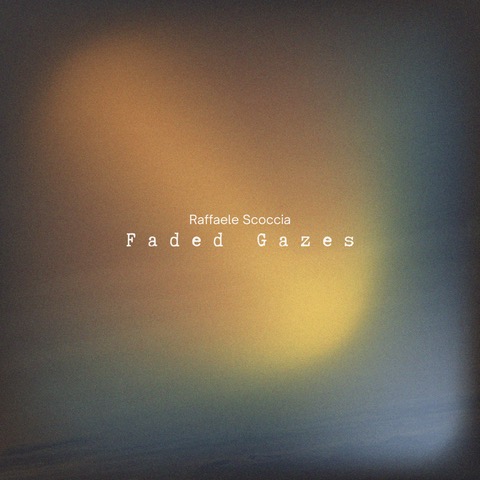
There is a particular kind of memory that doesn’t arrive as a clear image, but as something softened at the edges. Less like a photograph and more like light passing through fabric. That is the emotional space where Faded Gazes by Raffaele Scoccia seems to exist. It doesn’t attempt to reconstruct the past in detail. Instead, it lingers in what remains once detail has faded.
The opening is unassuming, almost hesitant. A simple melodic thread appears as if it has drifted in rather than been introduced. The piano established a mood of gentle searching, music that feels like it is trying to remember something without fully grasping it yet.
It is that sense of searching that is central to the composition. “Faded Gazes” moves as memory does, not in straight lines but in returns, hesitations and subtle shifts in focus. A phrase is left slightly open, and then is echoed or reshaped later, as if recalled from a slightly different emotional distance. Nothing is fixed. Everything feels in motion, even when the music itself is still.
Listen here:
There is a strong emotional intelligence in the way Scoccia handles contrast. Moments of quiet melancholy are never allowed to become heavy or self contained. Instead, they are gently counterbalanced by passages that feel lighter, almost translucent. These shifts are not dramatic enough to feel like “sections” in the traditional sense; rather, they behave like changes in perception – how the same memory can feel different depending on when it resurfaces.
Scoccia resists the temptation to over-develop ideas or to steer them toward a clear emotional conclusion. Instead, he allows space to do much of the expressive work.
There is also an underlying sense of forward motion that prevents the piece from becoming purely nostalgic. While the title might suggest looking backward, the emotional direction is more ambiguous. Memories here are not destinations; they are passages. Faded Gazes seems less concerned with what is remembered than with how remembering feels. There is a softness to it, but also a quiet clarity, as if distance has refined rather than erased emotional meaning. The past is not presented as something lost, but as something transformed – still present, just in a different state.
This approach reflects a broader thread in Scoccia’s recent work, where piano becomes less an instrument of performance and more a space for reflection. His background in electronic music and more expansive production work is not absent here, but it is distilled. What remains is immediacy: fingers on keys, sound in air, emotion unfolding without mediation.
The final notes do not resolve so much as recede, leaving behind an impression rather than a statement.
It understands that memory rarely ends cleanly. It fades, it returns, it shifts shape. And sometimes, as this piece suggests, its fading is precisely what allows it to stay with us.
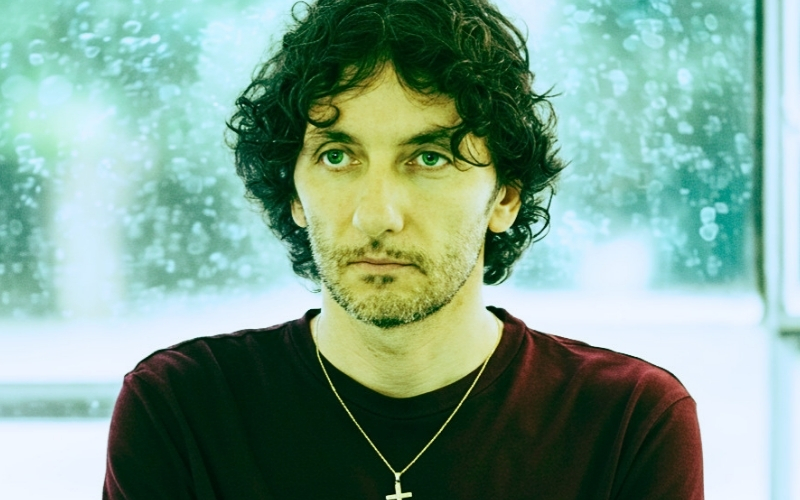
About Raffaele Scoccia
Raffaele Scoccia is a pianist and composer whose work is defined by subtlety and emotional clarity. Drawing from contemporary classical and minimalist traditions, he creates intimate piano driven pieces that emphasize space, tone and the natural resonance of each note.
His music often feels exploratory, guided as much by silence as by sound and is shaped by a sensitivity to mood and atmosphere. Through his compositions, Scoccia invites listeners into a reflective space: one where fleeting thoughts, quiet emotions and the passage of time are given room to unfold with grace and intention.
Follow Raffaele Scoccia on Instagram
 Cool Happy Genius Heroes