
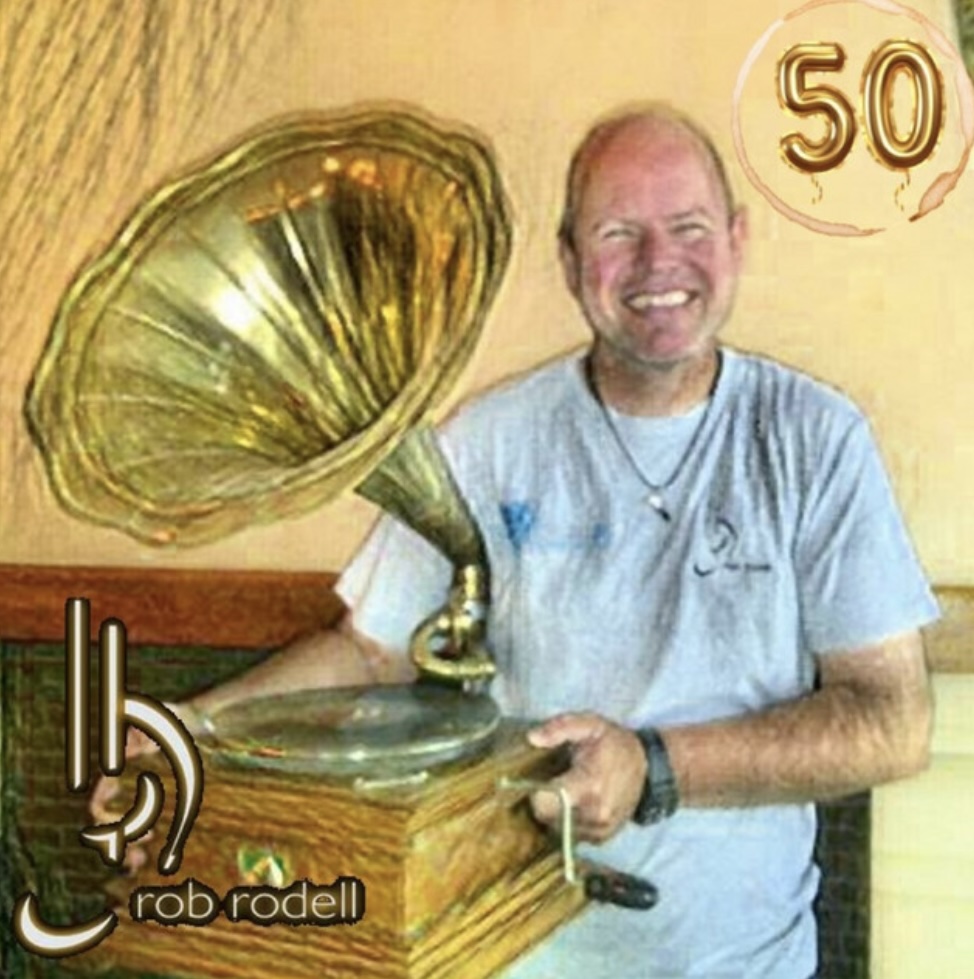
Some songs have a curious way of finding their audience, often taking a journey quite different from the one their creator originally imagined. For South African singer-songwriter Rob Rodell, “Could This Be Love” began as an exploration of faith, frustration and the search for personal meaning, before an unexpected musical transformation turned it into a gold-selling House hit.
Bringing together Rodell’s distinctive vocal style and the production talents of Cuebur, the track has travelled well beyond its original intentions, becoming a soundtrack to countless personal memories, relationships and moments on the dancefloor. Its story is as interesting as the song itself, offering a glimpse into the unpredictable nature of songwriting and the wonderful things that can happen when listeners make a piece of music their own.
Rodell is an artist with an unusually broad musical vocabulary. Classically trained, with a background spanning contemporary songwriting, a cappella performance and electronic music, he has spent more than two decades exploring different ways of bringing his voice and ideas to an audience. His musical journey has included a South African Music Award nomination, international performances and a gold-certified single, but “Could This Be Love” remains a particularly interesting chapter in that story.
The original inspiration was far removed from the familiar territory of romantic songwriting. Rodell recalls writing the song during a period when he felt his life was in disarray, describing his mind as a battlefield and his body as the war. His religious beliefs at the time brought an additional dimension to those feelings, as he wrestled with the apparent contradiction between faith, human imperfection and the desire to find some sense of peace. The song became a way of working through those emotions, with its central question directed towards a higher power rather than a romantic interest.
Yet there is something wonderfully open ended about the lyrics. Confusion, loneliness, frustration and the feeling of being taken for a fool are emotions that can belong to almost any complicated relationship. Rodell recognises that listeners have interpreted the song through their own experiences of infatuation and heartbreak, and is genuinely delighted that they have made it their own.
Originally conceived as a slower adult contemporary song, “Could This Be Love” underwent a complete change of character after Rodell met producer Cuebur while working at Soul Candi, where he was involved in teaching music business. Cuebur, then a young producer making his mark in House music, asked whether Rodell had any vocal recordings he could experiment with. The resulting remixes provided three different interpretations, with one eventually catching the attention of DJ Shimza and finding its way onto radio.
The House version gives the song a different kind of momentum, taking Rodell’s expressive vocal and placing it within a more immediate electronic setting. It is an effective combination, allowing the emotional uncertainty of the original to sit alongside the infectious qualities of dance music.
Rodell has spoken about reading comments from listeners who associate the track with university days, old relationships, friendships and important moments in their lives. For an artist, there can be few more satisfying experiences than discovering that something created in private has become part of somebody else’s personal history.
That connection also brings us back to Rodell’s interest in reception theory, which explores how the meaning intended by the creator can differ from the meaning received by an audience. “Could This Be Love” provides an almost perfect illustration. The songwriter may have begun with questions about faith and his relationship with God, but listeners have found their own stories within the same words and melodies.
Rob Rodell’s “Could This Be Love” is an interesting reminder that music rarely remains where its creator first places it. Sometimes a song’s greatest achievement is not simply what it says, but what it comes to mean to everyone who hears it. From an intensely personal piece of songwriting to a gold selling House favourite, this is a track that has travelled a rather remarkable distance and it continues to find new meaning along the way.
Connect with Rob Rodell on his Website

