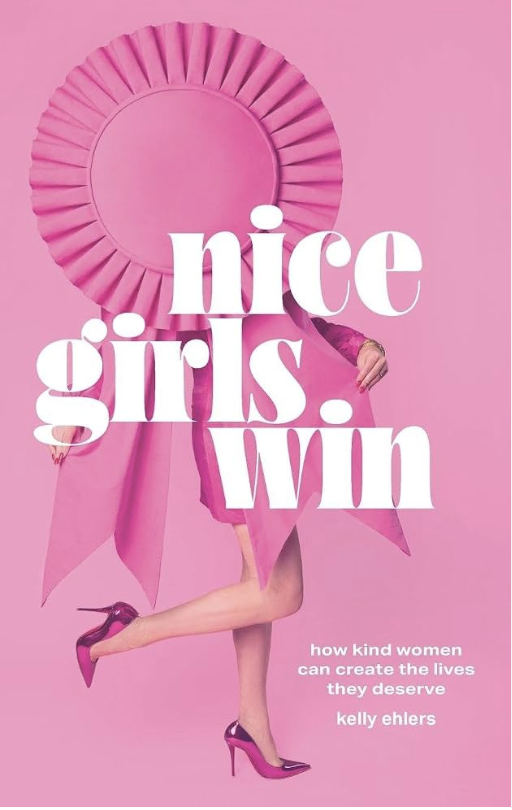
There is a quiet emotional question running beneath Nice Girls Win: How Kind Women Can Create the Lives They Deserve, Kelly Ehlers’ thoughtful and deeply personal examination of what women are taught to give away in exchange for approval. The book is not simply concerned with workplace success or becoming more assertive. Its deeper subject is identity: what happens when a woman becomes so practiced at meeting expectations that she loses track of which desires are actually hers.
Ehlers approaches that question through years of experience as an entrepreneur and leader, but the book’s most affecting moments come from the recognition that these patterns do not belong exclusively to boardrooms. They can appear anywhere a woman learns that being loved, respected or considered “good” depends upon how much she is willing to accommodate.
The idea of the Invisible Contract gives Ehlers a particularly effective way to describe that experience. It represents the collection of expectations women can absorb without ever consciously agreeing to them. Be pleasant. Be useful. Do not ask for too much. Make yourself available. Carry more than your share. Avoid disappointing people. Keep things running. Over time, those expectations can become so familiar that they begin to feel like personality rather than conditioning.
That distinction is central to the book.
Ehlers is not suggesting that generosity, empathy or consideration are qualities women should discard. Instead, she asks readers to examine the moment when those qualities cease to be freely chosen and become obligations. There is an enormous difference between helping because you genuinely want to and helping because you are afraid of what will happen if you do not. Nice Girls Win is interested in that difference.
It is also interested in the complicated relationship women can have with ambition. Ehlers understands that wanting more can bring its own discomfort, particularly for women who have learned to associate goodness with self-denial. A desire for greater professional success, financial independence, recognition or influence can feel strangely difficult to admit when a woman has spent years making sure everyone else’s needs are addressed first.
Her own history gives this discussion substance. Ehlers built The Evoke Agency and Tease Media into multimillion-dollar companies after experiencing the professional upheaval of being fired while pregnant. Her journey gives her an unusual perspective on achievement: she understands the satisfaction of building something significant, but she also understands that success becomes complicated when the process requires a person to continually negotiate away pieces of herself.
That tension makes the book feel larger than a conventional leadership guide.
There is something especially resonant in Ehlers’ discussion of boundaries because boundaries are rarely difficult simply because people do not know how to say no. Often, the difficulty comes from everything a woman believes the no might mean. She may worry that she is selfish, difficult, ungrateful, disappointing or no longer the person others can depend upon. Ehlers encourages readers to look beyond the immediate discomfort and consider what continually saying yes is communicating about their own priorities.
The same principle applies to success itself.
Nice Girls Win does not attempt to replace one rigid definition of womanhood with another. It does not suggest that every woman should become a CEO, chase constant growth or turn her life into a demonstration of ambition. Its more meaningful proposition is that women should have the freedom to decide what a fulfilling life actually looks like for them.
That can mean building a company. It can mean changing careers. It can mean earning more. It can mean having more time. It can mean pursuing something that has nothing to do with professional recognition. The important part is that the choice belongs to the woman making it.
This is where Ehlers’ message becomes genuinely moving. The book recognizes that women can become incredibly accomplished while still feeling as though they are somehow failing at their own lives. A full calendar can coexist with loneliness. Professional success can coexist with exhaustion. Being needed by everyone can coexist with feeling invisible.
Ehlers invites readers to consider another possibility: a successful life should not require constant disappearance.
Nice Girls Win ultimately offers a generous and deeply human perspective on ambition. It leaves room for kindness without demanding submission, leadership without hardness, and achievement without self-erasure. Most importantly, it encourages women to become curious about the lives they are building rather than automatically accepting the lives they have been told they should want.
That makes Kelly Ehlers’ book more than a conversation about being “nice.” It is an invitation to look inward, question the inherited rules and decide what deserves to remain.
And sometimes, that kind of questioning is where a much more honest life begins.

